Critical Minerals Report (01.26.2026): U.S. Commits $1.6B to USA Rare Earth; Mitsubishi Invests $600M in Arizona Copper; Energy Fuels Acquires ASM for $299M
As the global minerals race intensifies, the landscape is no longer merely defined by supply and demand curves—it is being redrawn by geopolitical fragmentation, industrial strategy, and economic nationalism. The upcoming Critical Minerals Institute (CMI) Masterclass, “The Competition for Critical Minerals in a Deglobalized World During the Next Decade (2026–2035),” could not be timelier. With Western governments moving from reactive policymaking to active market participation, and with China recalibrating its own leverage through pricing power and outbound capital, this session will bring overdue clarity to what lies ahead.
Moderated by geopolitical and macroeconomics expert and CMI Co-Chair Melissa “Mel” Sanderson and featuring strategic veterans such as Constantine Karayannopoulos and heralded international critical minerals expert and CMI-Co-Chair Jack Lifton, the Masterclass will dissect how emerging trade blocs, security-first supply policies, and rising export controls are transforming critical minerals from commodities into sovereign instruments. For those of us observing these shifts unfold in real time, the themes of this week’s report echo many of the questions this Masterclass intends to answer: What happens to market access when cooperation falters? Where is capital safest—and where is it most needed? And how will the next decade’s winners be defined not by reserves, but by the resilience and autonomy of their supply chains?
As the Masterclass preview makes clear, the 2026–2035 period will not be defined by globalization’s efficiencies, but by its unraveling—and what nations and industries choose to build in its place. If you are a CMI member, please RSVP to [email protected] and for non-members, click here to register. To become a CMI member, click here to register.
Now for this week’s Critical Minerals Report….
The global scramble for critical minerals hit a new inflection point this week. In Washington, the U.S. government made an unprecedented move by taking a direct 10% equity stake in USA Rare Earth, Inc. (NASDAQ: USAR) as part of a $1.6 billion package to develop a Texas rare earth mine and an Oklahoma magnet plant. This deal – to be unveiled today – marks the largest U.S. investment in the sector and follows last year’s government stakes in MP Materials Corp. (NYSE: MP), Lithium Americas Corp. (TSX: LAC) and Trilogy Metals Inc. (TSX: TMQ). The White House has signaled more “historic deals” ahead to boost domestic output of lithium, rare earths, and other strategic materials.
The same strategic urgency is evident in a newly finalized U.S. rule to speed up deep-sea mining permits for critical minerals. The Trump administration ordered regulators to consolidate and shorten reviews for companies hunting metals on the ocean floor – a controversial bid to counter China’s dominance, even as environmental groups warn of “irreversible” damage to seabed ecosystems. And looking abroad, Washington is leveraging diplomacy: after brokering a minerals pact in Africa, Kinshasa has sent the U.S. a list of state-owned mining assets – from copper-cobalt deposits to lithium projects – now available for American investment. This joint U.S.-Congo initiative is the most tangible sign yet of U.S. efforts to pry critical supply chains out of China’s orbit in Africa. It also comes as Brazil emerges as a coveted partner: Preliminary talks between the Trump and Lula administrations are exploring a rare earths alliance, part of negotiations over U.S. tariffs on Brazilian steel. Brazil sits on the world’s second-largest rare earth reserves (about 21 million tonnes), and both Washington and Brussels are courting Brasília’s cooperation on lithium, nickel, and rare earth projects. Notably, U.S. Secretary of State Marco Rubio is convening a first-ever Critical Minerals Ministerial in Washington on February 4 with Brazil, Argentina, and other allies in attendance. The goal: to cement new supply partnerships and ensure Western economies are not beholden to a single foreign supplier in the future.
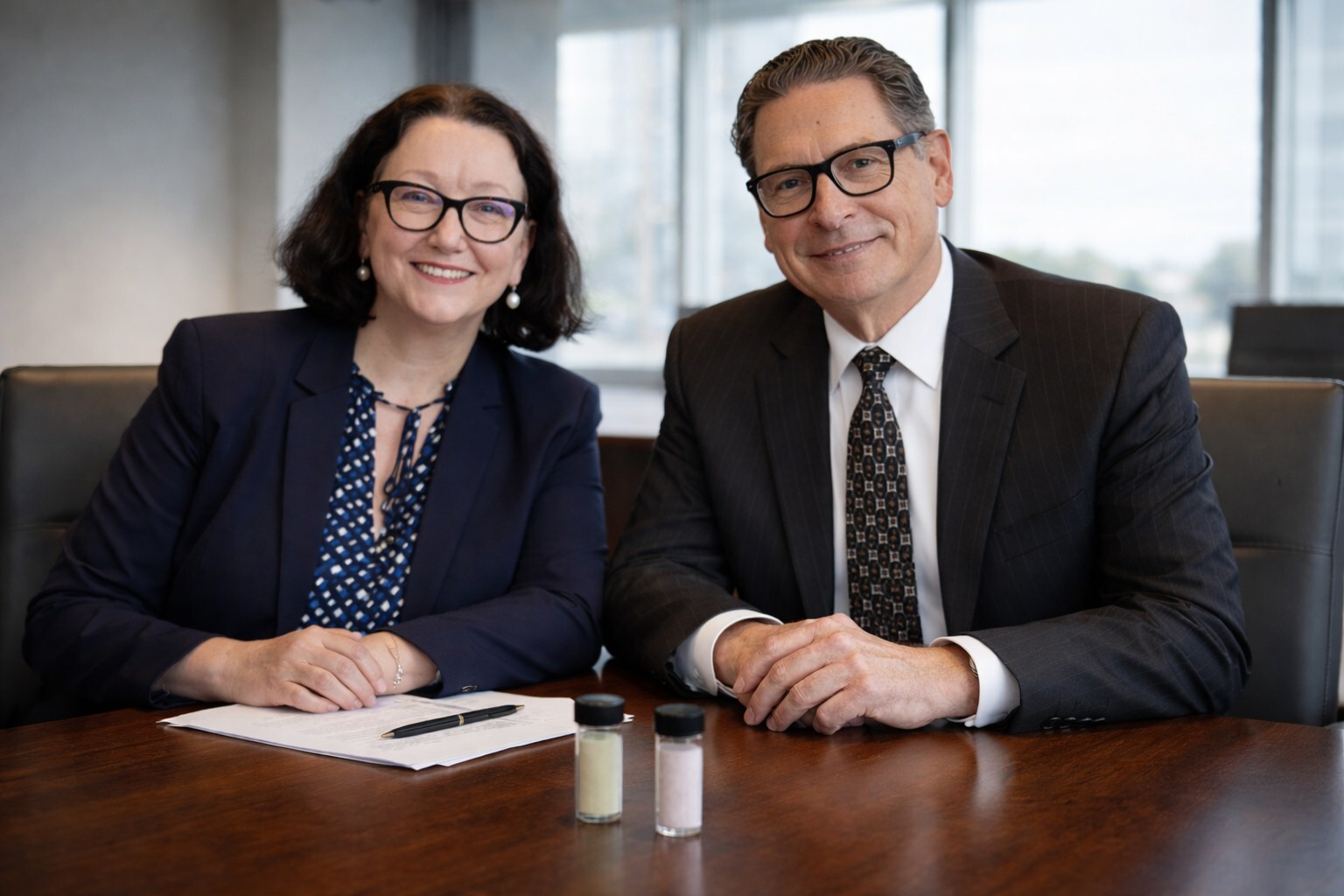
Major corporate moves are reinforcing these geopolitical shifts. Energy Fuels Inc. (NYSE American: UUUU | TSX: EFR) announced a USD$299 million acquisition of Australia’s Australian Strategic Materials Ltd. (ASX: ASM), aiming to create the largest fully integrated rare earth producer outside China. The deal will link Energy Fuels’ rare earth processing plant in Utah with ASM’s critical metals facility in Korea, establishing a “mine-to-metal” supply chain spanning from raw minerals to magnet alloys. It directly addresses a longstanding weakness in the West’s supply chain by combining upstream mining and separation with downstream metal-making capacity, a capability largely monopolized by China today. Industry experts note that in 2025 the U.S. still imported 56% of its rare earth needs, so moves like this are crucial for reducing dependency. Meanwhile, Lynas Rare Earths Ltd. (ASX: LYC) – the world’s top producer outside China – reported a 43% surge in quarterly revenue despite output disruptions. CEO Amanda Lacaze credited government policies for “improving the function of the market” by supporting floor prices for non-Chinese rare earth suppliers. U.S. programs to ensure minimum prices (for example, stockpiling agreements benefiting producers like MP Materials) have lifted rare earth oxide prices to more sustainable levels. Lacaze told investors that geopolitical tailwinds – from export controls in China easing oversupply to multilateral discussions on pricing support – have turned policy into a real market driver. The result: rare earth prices in January are strengthening further and giving Western projects a fighting chance against China’s low-cost competitors.
Beijing, for its part, is hardly standing still. New figures show China’s Belt and Road Initiative (BRI) investment hit a record high in 2025, as Beijing pours cash into energy and mining projects worldwide in what observers call a “global resources grab.” Notably, about $18 billion of BRI financing went into wind, solar and waste-to-energy projects last year, underscoring China’s lead in exporting clean technology. At the same time, Chinese funding for overseas metals and mining projects surged to new heights, as China seeks to lock in long-term supplies of minerals from Latin America to Africa. This strategy was on display in Africa recently, where Chinese companies dominate cobalt and copper output in the Congo – a dominance the U.S. is now directly challenging via the new DRC-U.S. minerals pact. On the financial front, China moved to boost its influence over commodity pricing: regulators announced that foreign investors will be allowed to trade China’s domestic nickel and lithium futures for the first time. By opening these contracts on the Shanghai and Guangzhou exchanges to global participants, Beijing aims to internationalize its benchmarks for battery metals and erode the primacy of London and New York markets. This comes amid a rally in Chinese metals markets, where open interest in Shanghai base metals futures has hit record levels as investors bet on an EV-driven demand boom. In short, China is positioning itself not just as the world’s biggest buyer of critical minerals, but as a price-setter.
One arena where China’s strategy is unfolding in real time is the electric vehicle market. Chinese automakers, led by BYD Co. Ltd. (HKG:1211), have now eclipsed Tesla, Inc. (NASDAQ: TSLA) in global EV sales, thanks to aggressive pricing and scale. This week brought a wake-up call for Detroit: Canada slashed its tariff on Chinese EVs from 100% to just 6%, effectively flinging open the door to China’s low-cost electric cars. Canadian Prime Minister Mark Carney had imposed the steep duties in solidarity with the U.S. (which cites national security to bar Chinese cars), but Ottawa reversed course in a bid to lower vehicle costs and spur competition. The implications for U.S. manufacturers are profound. Canada’s auto market is tightly integrated with America’s, so Chinese EVs gaining a foothold up north could be a trojan horse into the United States. Industry analysts say it’s likely just a matter of time before Americans are buying Chinese-made cars. In fact, President Donald Trump himself struck a surprisingly open tone, saying he welcomes Chinese automakers to build factories in the U.S. if they create American jobs. Such a shift would have been unthinkable a year ago. Now, with Chinese models already grabbing ~10% of new car sales in Europe and 20% in Mexico by undercutting Western rivals, Detroit’s Big Three – General Motors Company (NYSE: GM), Ford Motor Company (NYSE: F) and Stellantis N.V. (NYSE: STLA) – may be forced to reinvent their EV offerings. Cheaper Chinese models like BYD’s ~$8,000 Seagull have exposed a price gap in the market. U.S. automakers will either have to drive down costs (perhaps via their own partnerships in China or new supply deals) or risk ceding ground. For critical minerals, this trend has a dual edge: it threatens Western carmakers even as it could spur more localized battery supply chains (for instance, Chinese firms might build battery plants in North America to avoid tariffs). Either way, the EV supply chain is becoming ever more globally entwined, blurring the line between foreign and domestic when it comes to sourcing lithium, nickel or rare earth magnets.
Europe, too, is rewriting its playbook to secure strategic minerals. After 25 years of talks, EU member states approved a landmark free trade accord with Mercosur this month – explicitly to “secure access to critical minerals” and offset China. The deal, set to be signed on January 17, will slash import tariffs and give Europe privileged access to South America’s vast lithium, copper, nickel and rare earth reserves. European officials argue that partnering with resource-rich democracies like Brazil is vital for the clean-energy transition (Brazil, for example, holds 90% of the world’s niobium and is a rising lithium supplier). Brussels also inked a cooperation agreement with Japan this week to coordinate investment and financing for mineral supply chains. At the World Economic Forum in Davos, Japan’s industry minister and an EU commissioner affirmed they’ll “accelerate collaboration” – across both public and private sectors – to diversify supplies of rare earths and other materials away from China’s grip. Yet even as Europe reduces one dependency, another persists uncomfortably: Russian nuclear fuel. A Financial Times investigation found that nearly four years after the Ukraine invasion, Russia still supplies about 23% of Europe’s enriched uranium for power reactors. Western fuel executives warned that cheap Russian uranium and a lack of political will in the EU risk locking Europe into this strategic dependency for decades. While the U.S. has banned Russian nuclear imports effective 2028, the EU’s proposed ban is stalled by internal divisions (Hungary and others rely on Rosatom’s fuel and oppose cutting ties). This split was evident as some EU states quietly stockpile Russian fuel rods for their Soviet-designed reactors, even as countries like Sweden have eliminated Russian uranium from their supply. The EU’s dilemma over uranium parallels its past reliance on Russian gas – underlining that energy security and mineral security are now two sides of the same coin. It also highlights why Europe is racing to develop alternate sources, from funding uranium enrichment capacity in-house to supporting mining projects in Africa and Latin America.
Finally, on the metals front in the Americas, there was a notable investment in copper. Mitsubishi Corporation (TYO: 8058) agreed to spend nearly $600 million for a 30% stake in the Copper World mine in Arizona, a major new project by Hudbay Minerals Inc. (NYSE: HBM). The deal, closed earlier this month, will make Copper World one of the largest U.S. copper producers by 2029 and boost Hudbay’s output by over 50%. It’s a striking example of Asian capital (in this case Japanese) helping develop American critical mineral assets. Mitsubishi’s investment will fund the mine’s final feasibility studies and initial construction, and in return the Japanese trading house secures a long-term supply of “Made in America” copper for the clean-energy supply chain. The partnership was lauded by Hudbay as a “long-term strategic” alignment that validates the project’s value. It also dovetails with Japan’s broader critical minerals strategy: Tokyo has been striking deals from Canada to Africa to ensure access to battery metals and rare earths, often teaming up with western allies. As for copper, demand is projected to soar (for electrification infrastructure, EVs and beyond), so securing new sources in politically stable regions is paramount. We see similar logic in other tie-ups, like BHP in Ecuador or Rio Tinto in Serbia; this week’s Arizona deal stands out because it directly strengthens a North American supply hub with foreign financing.
Across all these developments – U.S. public investment in mines, Chinese financing blitzes, trade alliances, and corporate mergers – the through-line is unmistakable. Critical minerals are now treated as strategic assets on par with oil. Governments are taking equity stakes and striking diplomatic accords once reserved for energy security. Companies are restructuring themselves to offer end-to-end supply chains outside of China. And new policies, from export controls to price supports, are rewriting the rules of global trade for metals. This past week’s cascade of news underscores an emerging consensus: the road to net-zero and advanced manufacturing runs through mines and mineral processing plants. Whether it’s rare earth magnets for fighter jets, lithium for batteries, or uranium for reactors, control of these inputs is shaping up to be a defining factor in economic and national security. The world’s major powers clearly recognize this – and they are acting with urgency, each in their own way, to ensure they won’t be left behind in the new resource race. In the process, the century-old resource order (long dominated by oil and gas geopolitics) is rapidly evolving. Critical Minerals have taken center stage, and the events of this week show that the scramble to secure them is only accelerating.
These forces now define what the Critical Minerals Institute describes as the New Critical Minerals Economy — an environment shaped less by geology than by policy, security considerations, and strategic alignment, and one that will increasingly determine how capital, industry, and governments interact across the global minerals landscape. CMI Summit V: The New Critical Minerals Economy will take place May 13–14, 2026, in Toronto. Click here to register or email [email protected] for further information.
Do you enjoy the Critical Minerals Report?
Click here to become a Critical Minerals Institute member and get each edition delivered straight to your inbox.
InvestorNews Critical Minerals Institute (CMI) Directorial Headline Picks for the Week:
- January 25, 2026 – China to Open Up Nickel and Lithium Futures to Foreign Investors (Source)
- January 25, 2026 – Chinese EVs in Canada will force Detroit automakers to change course (Source)
- January 24, 2026 – Trump administration to take 10% stake in USA Rare Earth in $1.6 billion deal, sources say (Source)
- January 23, 2026 – Brazil bets on national strategy to develop rare earths (Source)
- January 22, 2026 – Japan and EU affirm cooperation for stable supply of critical minerals (Source)
- January 21, 2026 – Europe struggles to end reliance on Russian uranium (Source)
- January 21, 2026 – Critical minerals firm weighs plan to build US rare earth plant (Source)
- January 21, 2026 – Mitsubishi invests $600M in Arizona copper mine project set to become third largest in US (Source)
- January 21, 2026 – Trump to speed permits for deep-sea mining in international waters (Source)
- January 20, 2026 – Energy Fuels to acquire Australian Strategic Materials to create new “mine-to-metal & alloy” rare-earth champion (Source)
- January 20, 2026 – Trump administration convening first critical minerals summit (Source)
- January 20, 2026 – Congo offers manganese, copper‑cobalt, and lithium assets to US investors under minerals pact (Source)
- January 20, 2026 – EU locks in access to South American lithium and critical minerals (Source)
- January 20, 2026 – Lynas CEO says government policies are improving rare earths market (Source)
- January 18, 2026 – Brazil and US eye rare earths deal (Source)
- January 18, 2026 – Beijing pours cash into Belt and Road financing in global resources grab (Source)
InvestorNews (YouTube) Interview Updates:
- January 23, 2026 – Why Tungsten Has Jumped to No. 1 on the World’s Critical Minerals Hot List https://youtu.be/eN9tH72z2Fc
- January 23, 2026 – Energy Fuels and Australian Strategic Materials Unite to Build a New Rare Earths Powerhouse for Western Markets https://youtu.be/oiymjqcBkJg
- January 23, 2026 – Christopher Ecclestone with Scandium Canada’s Guy Bourassa on One of the World’s Leading Primary Scandium Resources https://youtu.be/pQch2XL7XyY
- January 22, 2026 – Quantum Critical Metals’ Marcy Kiesman on Advancing Gallium and Rubidium in the Critical Minerals Race https://youtu.be/C8xk79iZKfs
- January 21, 2026 – Greenland Is Not the Critical Minerals Answer. Canada Is. https://youtu.be/fW5jAVxm9yM
- January 20, 2026 – Critical Minerals Expert Jack Lifton and ReeXploration’s Christopher Drysdale Confirm Full Funding for Eureka Uranium Drill Program https://youtu.be/sr0l3IbyLv4
- January 19, 2026 – American Tungsten’s Ali Haji on “Leading the Tungsten Race in the U.S.” https://youtu.be/1g3Al0cYuNM
- January 19, 2026 – Thomas “Tom” Wood on Trinity One Metals’ High-Grade Silver Mine Acquisition in Ecuador https://youtu.be/DYKRI5Wy0d8
InvestorNews.com News Release Updates:
- January 22, 2026 – Nord Precious Metals Invites Silver Investors to Meet Management at The Vancouver Resource Investment Conference Jan. 25-26 https://bit.ly/3M3EJqd
- January 22, 2026 – American Rare Earths Partners with University of Wyoming to Explore Byproducts Associated with Future Rare Earths Production at Halleck Creek https://bit.ly/4qA1AZH
- January 22, 2026 – Romios Announces Completion of NI 43-101 Technical Report for the 100% Owned Trek Property in BC’s Golden Triangle, Including the Drill-Ready Trek South Porphyry Copper-Gold Prospect https://bit.ly/4bbJdp5
- January 21, 2026 – U.S. Trade Proclamation Reinforces Importance of Domestic Rare Earths Supply Chain https://bit.ly/4qZNuAn
- January 21, 2026 – Homerun Resources Inc. Announces Letter of Intent with SORG Group (Germany) for Completion of the Antimony-Free Solar Glass Manufacturing Plant in Santa Maria Eterna, Bahia, Brazil https://bit.ly/4bbXrGw
- January 21, 2026 – Defense Metals Appoints Robin Jones as Vice President, Projects https://bit.ly/3LqswMd
- January 21, 2026 – Volta Commences Definition Drilling and Resource Expansion Program at the Springer REE Project in Ontario, Canada https://bit.ly/3LtkdPH
- January 21, 2026 – Energy Fuels to acquire Australian Strategic Materials https://bit.ly/49Ly8Zv
- January 20, 2026 – Energy Fuels to acquire Australian Strategic Materials to create new “mine-to-metal & alloy” rare-earth champion https://bit.ly/4pSpQVH
- January 20, 2026 – Happy Creek Announces Resignation of Director https://bit.ly/4pRa7pT
- January 20, 2026 – Stakeholder Receives Class 1 Exploration Approval for Ballarat https://bit.ly/4qU7uUY
- January 20, 2026 – American Tungsten Reports Significant Tungsten in Underground Sampling https://bit.ly/3NuQtlZ
- January 20, 2026 – Appia to Initiate Magnetotelluric (MT) Survey at the Otherside Uranium Property, Targeting Uranium-Prospective EM Conductor https://bit.ly/3Ns0fFv
- January 20, 2026 – Homerun Resources Inc. Announces Settlements from Sorbie Sharing Agreement https://bit.ly/3YNzRIM
- January 19, 2026 – Coniagas Announces Proposed Amendments to Common Share Purchase Warrants https://bit.ly/49N1BCn
- January 19, 2026 – Power Metallic Reports Lion Zone Recoveries of 98.9% Copper, 93.9% Palladium, 96.8% Platinum, 85% Gold and 88.9% Silver from Initial Metallurgical Results as Reported by SGS Canada Inc. https://bit.ly/4quSJYX
- January 19, 2026 – Romios Announces Shareholder Approval of Name Change to Oreterra Metals Corp. and Share Consolidation https://bit.ly/49LexbV
About the Critical Minerals Institute (CMI):
The Critical Minerals Institute (CMI) is a global brain trust for the critical minerals economy, serving as a hub that connects companies, capital markets, and policymakers. Through CMI Masterclasses, the weekly Critical Minerals Report (CMR), bespoke research, and board-level advisory services, CMI delivers actionable intelligence spanning exploration finance, supply chains, and geopolitics.
CMI also convenes the flagship Annual Critical Minerals Institute Summit, a global gathering of government leaders, institutional investors, and industry executives. The next event, CMI Summit V, themed “The New Critical Minerals Economy,” will take place May 13–14, 2026, in Toronto, Canada.
For more information, visit CriticalMineralsInstitute.com or contact CMI Executive Director Tracy Hughes at +1 647-289-7714 or [email protected].