Voyageur’s Brent Willis on the Critical Minerals Behind Modern Healthcare
When investors discuss critical minerals, the conversation usually centers on copper, uranium, rare earths, lithium, tungsten, and antimony. Yet some of the most strategically important minerals rarely enter the discussion despite their direct role in modern healthcare.
Barite and iodine are two notable examples.
Barite is classified as a critical mineral in the United States, while iodine is increasingly viewed as a strategic material due to its importance in medical imaging. Both are essential inputs for radiology contrast agents used to diagnose a wide range of diseases. Without secure supplies of pharmaceutical-grade barite and iodine, healthcare systems face growing supply chain risks. That reality helps explain the significance of the partnership announced earlier this year between Voyageur Pharmaceuticals Ltd. (TSXV: VM) and Bayer.
According to Voyageur, Bayer spent approximately eighteen months evaluating the Company’s iodine extraction technology before committing $2.35 million in non-dilutive funding to advance feasibility work and field-scale testing. The agreement also contemplates a future iodine offtake arrangement following successful completion of technical milestones.
For investors, the importance of the Bayer relationship extends beyond financing. It represents validation from one of the world’s largest radiology companies at a time when global iodine supply chains are under increasing pressure.
The second component of the Voyageur story is pharmaceutical-grade barite.
The Company’s Frances Creek deposit in British Columbia appears to possess a rare geological characteristic: exceptionally low levels of contaminating metals. This is important because most barite deposits contain impurities that limit their suitability for pharmaceutical applications.
Voyageur is currently advancing human trials designed to compare radiology products manufactured using Frances Creek barite against existing commercial alternatives. The objective is to demonstrate that naturally occurring pharmaceutical-grade barite can provide equal or improved imaging performance.
What makes Voyageur particularly interesting from a critical minerals perspective is its business model.
The Company is pursuing a vertically integrated strategy that spans resource development, mineral processing, active pharmaceutical ingredients, and radiology products. Management often describes the vision as “from earth to bottle” — controlling the supply chain from the mineral deposit through to the finished healthcare product.
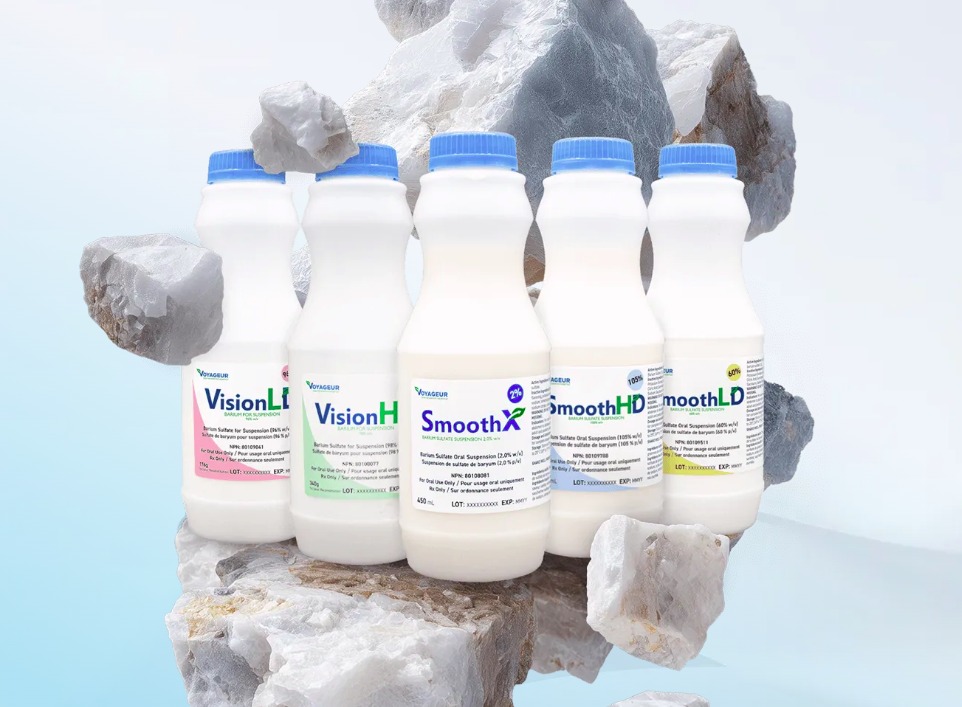
That strategy has already begun to generate results. Voyageur reported product sales in 2025 while continuing to advance feasibility studies for both its barite and iodine businesses.
The broader investment thesis is straightforward. Most critical minerals companies create value through extraction. Voyageur is attempting to create value across the entire supply chain by controlling the raw materials, the processing, and ultimately the pharmaceutical products derived from them. As governments and healthcare providers place greater emphasis on supply chain security, domestic manufacturing, and strategic materials, Voyageur is positioning itself at the intersection of critical minerals and healthcare infrastructure. If successful, the Company could become one of the few publicly traded issuers offering investors exposure not only to critical minerals production, but also to the higher-value healthcare products those minerals make possible.
To access the complete interview, click here
Don’t miss other InvestorNews interviews. Subscribe to the InvestorNews YouTube channel by clicking here