AR3 commences follow-up drilling to test scale of Overland niobium-REE carbonatite discovery
Highlights:
- Follow-up drill program underway at AR3’s emerging niobium-rare earth carbonatite discovery at the Overland Project, South Australia.
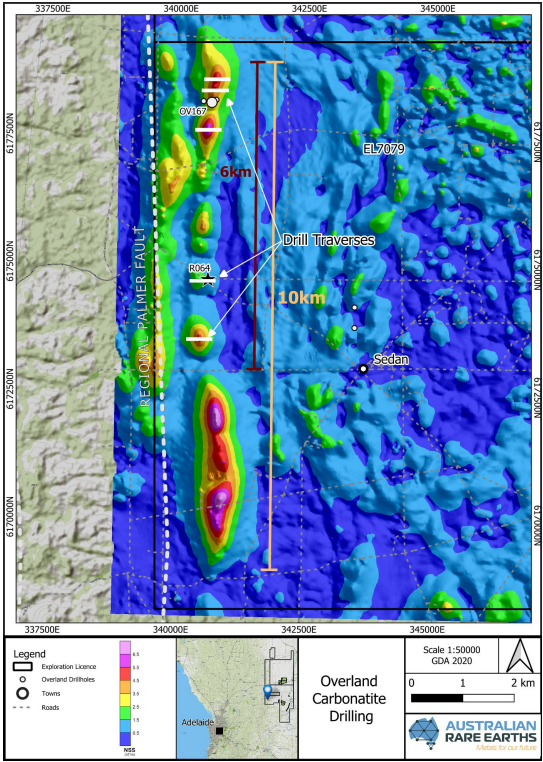
- ~2,000m aircore program planned, testing priority targets within the northern 6km of the recently defined 10km magnetic corridor1
- Five drill traverses are planned across the magnetic trend to test the continuity and scale of the carbonatite system.
- Drilling includes follow-up testing of historic hole R64, which recorded a significant gamma response1 over a 15m interval ~3km south of the OV167 discovery.
- The Drill Program follows the identification of a niobium-rare earth carbonatite system in hole OV1672 and subsequent delineation of a significant corridor-scale magnetic anomaly.
- Carbonatite systems are globally important sources of niobium and rare earth elements, recognised for their potential to host large-scale critical mineral deposits.
- Engage with this announcement at the AR3 investor hub.
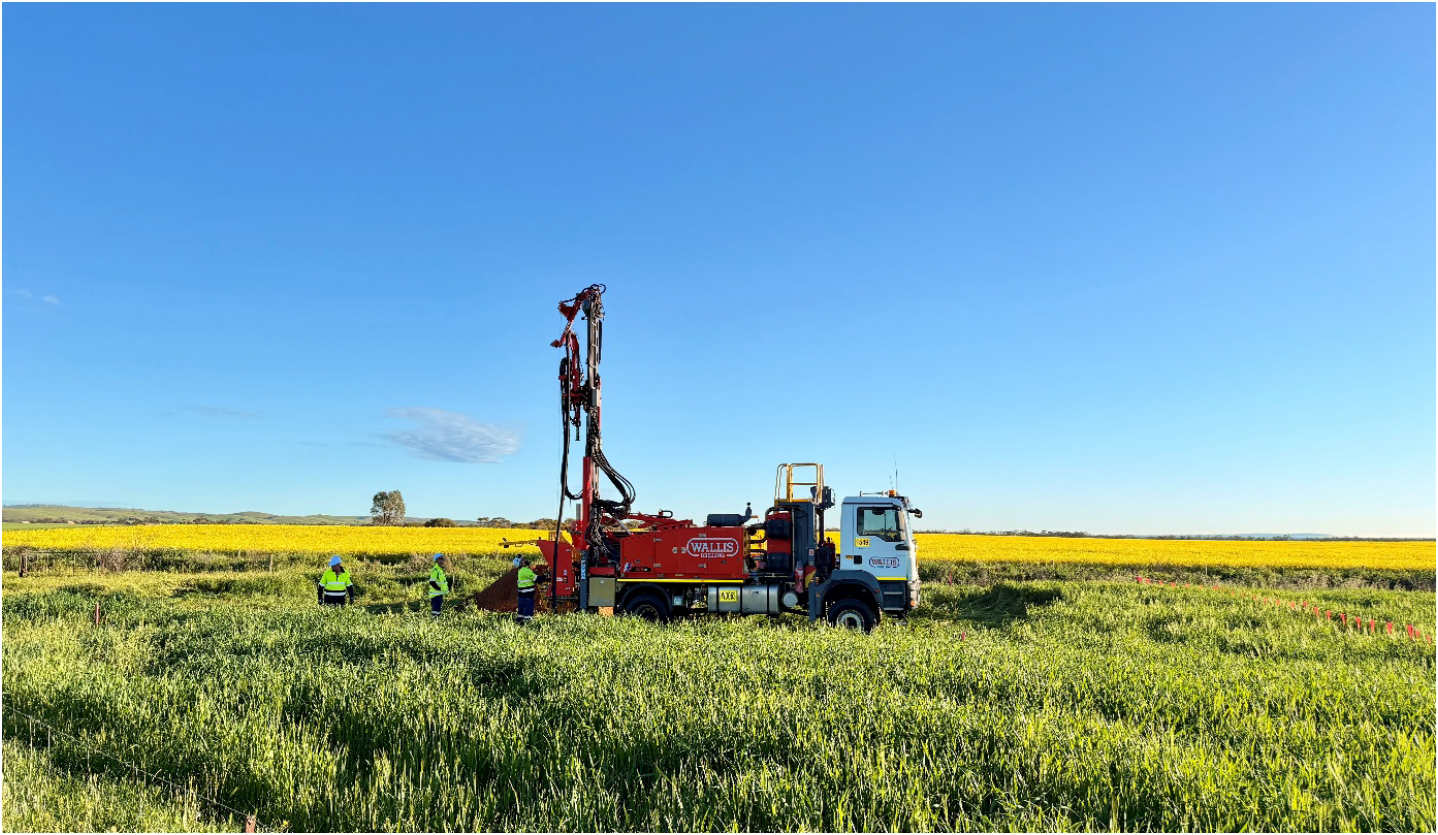
September 1, 2026 (Source) — Australian Rare Earths Limited (ASX: AR3) is pleased to advise that follow-up exploration drilling has commenced at the Company’s 100%-owned Overland Project in South Australia, targeting extensions to the recently identified niobium-rare earth carbonatite mineral system.
The approximately 2,000 metre aircore drilling program will focus on the northern 6 kilometers of the 10 kilometer magnetic corridor identified through reprocessing detailed airborne magnetic data (AR3 ASX Release 23 July 2026). The program comprises five drill traverses designed to test multiple magnetic targets interpreted to represent potential carbonatite intrusive centers and associated mineralised zones.
The program is designed to establish whether mineralisation is continuous along strike and will serve as the support required to move from a single discovery toward a defined exploration target.
The campaign follows AR3’s discovery of significant niobium and rare earth mineralisation in drill hole OV1671 (AR3 ASX Release 8 July 2026), which intersected 19 metres of anomalous rare earth and niobium mineralisation from 86 metres to the end of hole, demonstrating the fertility of the carbonatite system and highlighting its potential for expansion. That the intersection remains open at end-of-hole is significant in its own right; meaning the true thickness of mineralisation at OV167 is not yet defined and the current program is designed to test that open potential along strike.
Drilling will also target the vicinity of historic drill hole R64, which recorded a significant gamma response from 56 metres to end of hole (AR3 ASX Release 23 July 2026), and occurs within the same magnetic corridor approximately 3 kilometers south of OV167. The coincidence of magnetic and radiometric responses along this extensive trend provides additional support that the carbonatite system may extend well beyond the initial discovery area.
Travis Beinke – Managing Director and CEO, Australian Rare Earths Limited
“The commencement of this drilling program marks the next phase of systematic testing of what is emerging as a significant carbonatite system at Overland.
Our initial discovery hole, combined with the subsequently identified 10 kilometer magnetic corridor and encouraging historic drilling results, highlights the scale potential of the system. This program is designed to test multiple targets along strike and improve our understanding of the geometry, continuity, and fertility of the carbonatite mineralisation. Carbonatite-hosted deposits are globally important sources of rare earth elements and niobium. We are excited to be advancing drilling across this highly prospective corridor and look forward to updating shareholders as results become available.”
Growing Evidence of a Large Carbonatite System
AR3’s exploration model (and the case for a system with scale, rather than a single anomalous hole) is supported by several features already identified at Overland:
- Significant niobium and rare earth mineralisation intersected in OV167. Mineralisation remains open at depth, meaning the true scale of the OV167 intercept is not yet defined.
- Identification of pyrochlore: the principal niobium ore mineral in major global niobium deposits. A continuous 10 kilometer magnetic corridor interpreted to represent a large carbonatite-related system, providing the target inventory for the current and future drill programs. Historic drilling evidence (R64) supporting continuation of the system well away from the original discovery area.
- Geological characteristics consistent with fertile carbonatite mineral systems capable of hosting niobium and rare earth mineralisation, the same mineral system class that hosts several of the world’s largest niobium and rare earth deposits.
Next Steps
Assay results and downhole gamma data from the current program will be progressively reported to shareholders as they are received and interpreted, consistent with the Company’s continuous disclosure obligations.
The announcement has been authorised for release by the Board of Australian Rare Earths Limited.
For further information please contact:
Australian Rare Earths Limited
Travis Beinke
Managing Director and CEO
T: 1 300 646 100
Media Enquiries
Jessica Fertig
Tau Media
E: [email protected]
Engage and Contribute at the AR3 investor hub: https://investorhub.ar3.com.au/
About Australian Rare Earths Limited
Australian Rare Earths is committed to the timely exploration and development of its 100% owned, flagship Koppamurra Project, located in the new Koppamurra rare earths Province in southeastern South Australia and western Victoria. Koppamurra is a prospective ionic clay hosted rare earth deposit, rich in all the elements required in the manufacture of rare earth permanent magnets which are essential components in electric vehicles, wind turbines and domestic appliances. In addition, AR3 is actively reviewing other potential prospective areas which may also host uranium and ionic clay hosted rare earth deposits throughout Australia.
The Company is focused on executing a growth strategy that aims to position AR3 as an independent and sustainable source of energy transition metals, playing a pivotal role in the global transition to a green economy.