Volta Intersects High-Grade Gallium Mineralization at the Springer REE Project in Ontario, Canada
HIGHLIGHTS
- Broad, continuous gallium mineralization confirmed in Borehole SL25-23 with 117m assayed to date:
- 77g/t Ga2O3 over 117m (from 59.0m to 175.8m)
- Including 120 g/t Ga2O3 over 11.1m (from 153.0m to 164.1 m)
- Up to 332.0 g/t Ga2O3 over 1.0m (from 82.0m to 83m)
- Results rank among the highest-grade gallium assays reported in North America to date, based on publicly available data
- Gallium is on the critical mineral list for Canada, Europe, Australia and the US, and the gallium market is expected to grow significantly from US$2.5B in 2024 to US$21.5B by 2034*
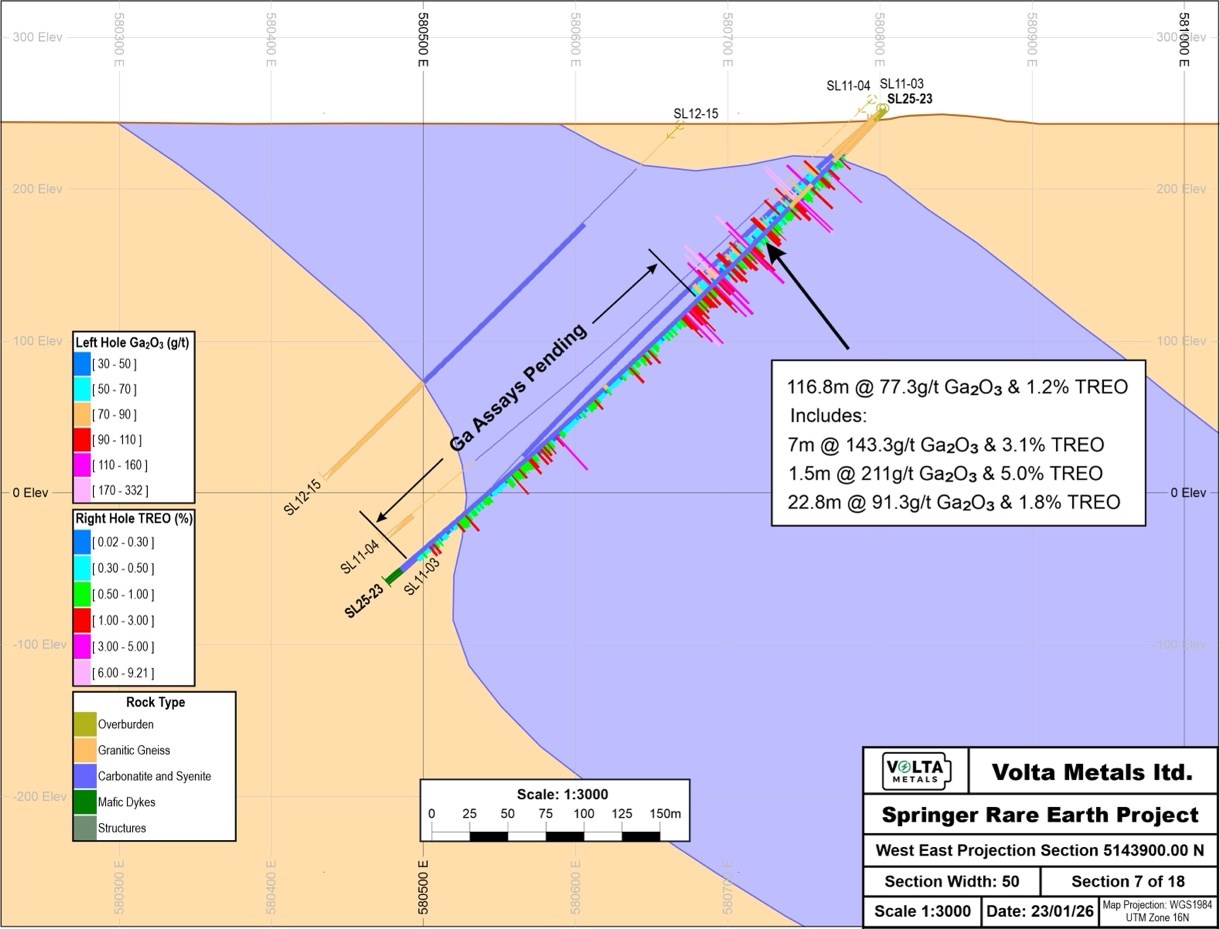
January 26, 2026 (Source) — Volta Metals Ltd. (CSE: VLTA) (FSE: D0W) (OTC Pink: VOLMF) (“Volta” or the “Company“) is pleased to report initial gallium assay results from its Springer Rare Earth Project in Sturgeon Falls, Ontario, Canada. The newly received assays from drill hole SL25-23 confirm thick, continuous gallium mineralization over a 116.8m interval grading 77 g/t Ga2O3, including multiple high-grade zones exceeding 100 g/t Ga2O3 (Figure 1).
These initial Springer results show gallium mineralization within the high-grade range, reinforcing the project’s potential to emerge as a leading North American gallium-bearing REE system (Table 1).
Table 1. Select Ga2O3 Assays from Drill hole SL25-23
| Ga2O3 g/t | Interval (m) | From (m) | To (m) |
| 77.3 | 116.8 | 59.0 | 175.8 |
| 143.3 | 7.0 | 81.0 | 88.0 |
| 332.0 | 1.0 | 82.0 | 83.0 |
| 172.7 | 3.0 | 126.0 | 129.0 |
| 194.9 | 1.5 | 127.5 | 129.0 |
| 211.0 | 1.5 | 156.0 | 157.5 |
| 119.8 | 11.1 | 153.0 | 164.1 |
| 91.3 | 22.8 | 153.0 | 175.8 |
Globally, gallium is primarily produced as a secondary by-product of aluminum and zinc refining, making primary natural gallium occurrences uncommon. Industry benchmarks generally classify gallium grades as:
- Low grade: <35 g/t Ga2O3
- Moderate-grade: 35-60 g/t Ga2O3
- High grade: >60 g/t Ga2O3
The sampled interval (58.0m to 175.8m) from hole SL25-23 ended in 118.3 g/t Ga2O3, with the remainder of the hole (to 372m) currently undergoing gallium assay.
These results represent the widest and most consistent high-grade gallium intercept identified at Springer to date and demonstrates the project’s multi-commodity critical minerals potential in addition to its high-grade Rare Earth Element (“REE“) mineralization.
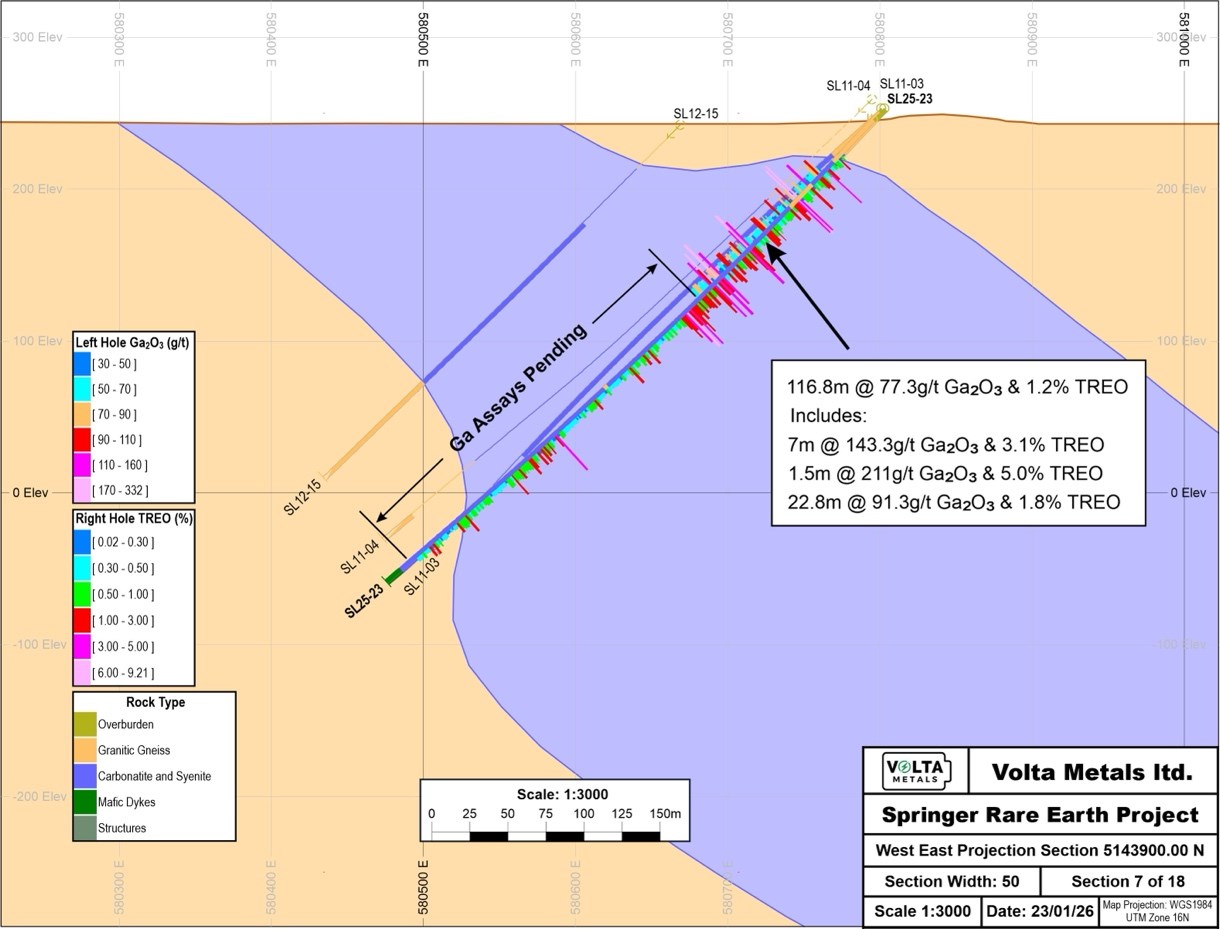
Figure 1. Ga2O3 g/t assay highlights in drill hole SL25-23.
To view an enhanced version of this graphic, please visit:
https://images.newsfilecorp.com/files/9598/281538_99fbc5f8a45938f2_001full.jpg
CEO Kerem Usenmez commented, “These gallium assays further reinforce Springer’s position as one of North America’s most advanced and strategically important critical minerals projects. The presence of long, continuous intervals with consistently high gallium grades is rare in North America.“
Gallium is on the critical mineral list for Canada, Europe, Australia and the US, with the gallium market expected to grow significantly from approximately US$2.5B in 2024 to US$21.5B by 2034. Subject to ongoing metallurgical testwork, Springer could produce notable by-product Ga alongside Light and Heavy Rare Earth Elements.*
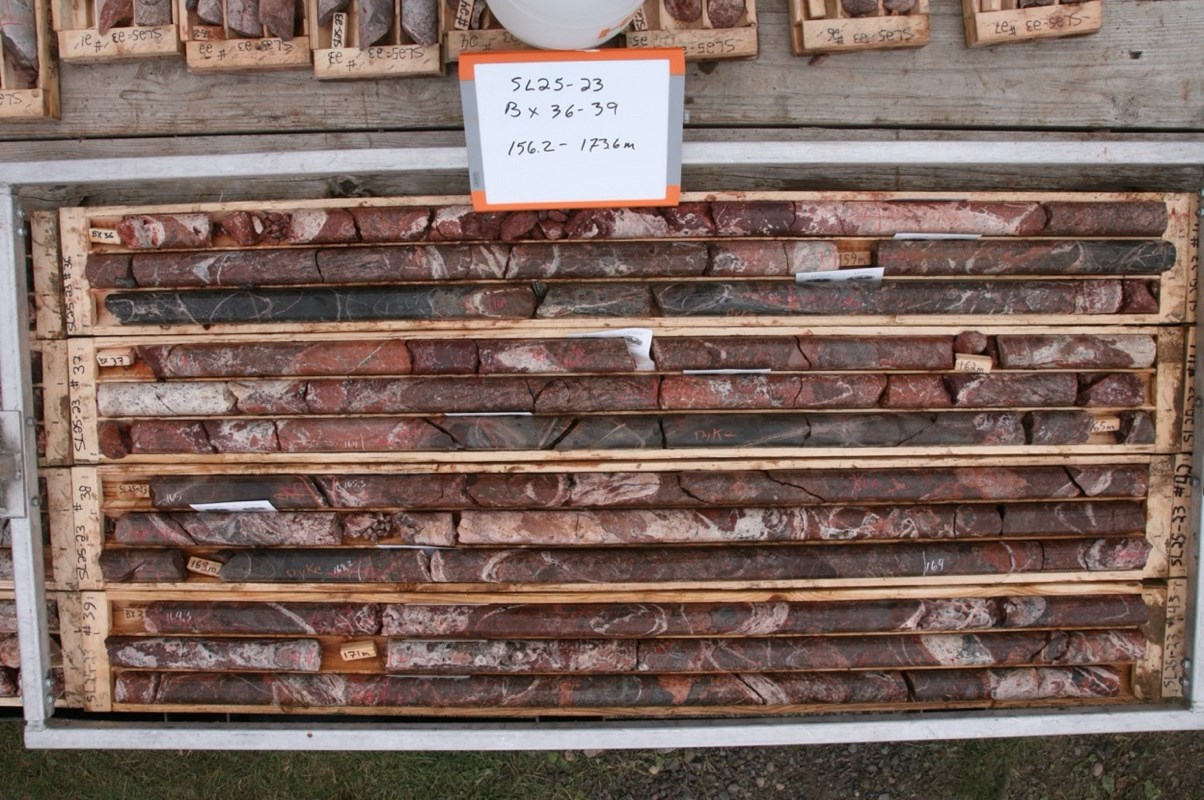
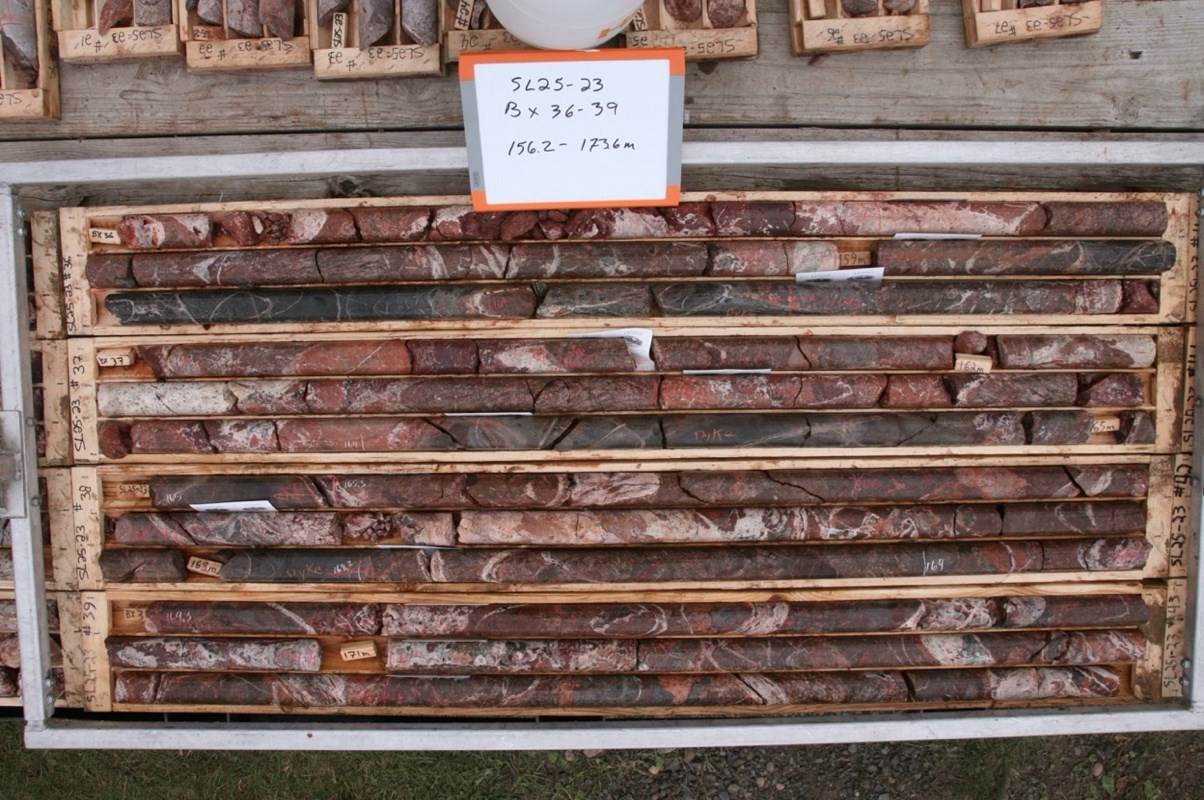
Figure 2. High-grade gallium mineralization with grades up to 211.0 g/t Ga2O3 over 1.5m (from 156.0 to 157.5m) in borehole SL25-23.
To view an enhanced version of this graphic, please visit:
https://images.newsfilecorp.com/files/9598/281538_99fbc5f8a45938f2_002full.jpg
The Global Gallium Market
The gallium market is overwhelmingly dominated by China, which controls 98% of global gallium production1.
1 https://www.mining.com/web/gallium-price-rises-to-highest-since-2011-following-china-export-curbs/; https://www.statista.com/statistics/1441110/primary-production-of-gallium-worldwide-by-country/
Expanding Demand Across Multiple Sectors
Demand for gallium has expanded dramatically across a range of high-tech sectors, placing sustained upward pressure on prices. The global gallium market is projected to grow from approximately US$2.32 billion in 2024 to US$2.91 billion in 2025, representing a compound annual growth rate (“CAGR“) of 25.4%3. More aggressive forecasts suggest the market could reach US$17.0 billion by 2032, expanding at a CAGR of 24.5%4. Continued demand growth across the semiconductor, telecommunications, defense, and renewable energy sectors is expected to support ongoing price strength.
3 https://blog.tbrc.info/2025/02/gallium-market-drivers-2/
4 https://www.persistencemarketresearch.com/market-research/gallium-market.asp
Price Increase and Market Dynamics
Gallium prices have experienced significant volatility in recent years, with a clear upward trend driven by tightening supply and accelerating demand. In December 2024, gallium price surged to US$575 per kilogram, representing a 17% increase over previous levels and the highest price since 20115.
The most significant factor driving recent price increases has been China’s strategic export restrictions. Initial export controls introduced in August 2023 disrupted global supply chains and pushed prices higher. By December 2024, China had escalated these measures, announcing a comprehensive ban on gallium exports to the US, further intensifying market pressures. With China accounting for approximately 98% of global gallium production, these export restrictions have had a disproportionate impact on global supply and pricing. China’s production advantage stems from its integration of gallium recovery with its massive aluminum industry, as gallium is typically extracted from the alumina processing stream6.
5 https://www.mining.com/web/gallium-price-rises-to-highest-since-2011-following-china-export-curbs/; https://www.mining.com/web/gallium-price-has-more-than-doubled-since-china-export-curbs/
9 https://www.fitechem.com/news/gallium-price-floor-set-to-rise-in-2021/
Gallium Applications
Semiconductor Applications and Integrated Circuits7: The semiconductor industry represents the largest demand driver for gallium, with approximately 74% of gallium imported into the United States in 2023 used in integrated circuits. Gallium arsenide (GaAs) and gallium nitride (GaN) have become critical semiconductor materials across a wide range of industries, including high-tech, automotive, aerospace, healthcare, and telecommunications. Gallium nitride semiconductors are particularly valuable due to their superior power density and heat resistance properties. Traditionally used primarily in military applications, GaN is now finding increased adoption in commercial applications, including 5G networks, wireless infrastructure, power electronics, satellites, electric vehicles, and consumer electronics. As one manufacturer noted, “GaN offers higher power density, more reliable operation and improved efficiency over traditional silicon-only based solutions”.
Optoelectric Devices8: Approximately 25% of gallium consumption goes toward optoelectronic devices such as laser diodes, light-emitting diodes LEDs, photodetectors, and solar cells. Continued growth in consumer electronics devices – such as mobile phones, laptops, televisions, and advanced lighting applications continues to drive demand in this segment. These applications are particularly important for fibre optic communications and high-speed data transmission technologies, both of which represent key long-term growth areas.
Renewable Energy Applications9: The renewable energy sector represents an emerging but potentially significant source of future gallium demand. Thin-film solar panels rely heavily on gallium for their high efficiency, and as renewable energy adoption accelerates globally, gallium requirements are expected to grow substantially. Europe alone is projected to consume up to 26 times more gallium by 2030 compared to current levels, according to the Fraunhofer Institute*. The scale of potential demand is staggering – Austria’s planned renewable energy projects, despite serving a population of only 9 million, would require approximately 4.5 times the current global gallium production. This statistic underscores the looming supply-demand imbalance as gallium becomes increasingly integral to both energy independence and environmental commitments worldwide.
8 https://www.grandviewresearch.com/industry-analysis/gallium-market-report
9 https://strategicmetalsinvest.com/gallium-prices/
About the Springer Rare Earth Deposit
The 2012 mineral resource estimate presented for the Springer Rare Earth Project is historical in nature. Volta’s Qualified Person has not completed sufficient work to confirm the results of the historical resource. Volta does not treat this as a current mineral resource but considers it relevant as a guide to future exploration and includes it for reference purposes only. The historical resource was estimated by Tetra Tech Wardrop in 2012. The gallium was not included in this initial mineral resource estimate.
The block model and mineral resource for the Springer Rare Earth Project is classified as having both Indicated and Inferred Mineral Resources based on the number of boreholes, borehole spacing and sample data populations used in the estimation of the blocks. The mineral resource estimate for the deposit, at a 0.9% Total Rare Earth Oxide (“TREO“) cut-off, is an Indicated Resource of 4.2 Mt at 1.14% TREO, 0.02% ThO2, with approximately 6% of the TREO being made up of HREO; and an Inferred Resource of 12.7 Mt at 1.17% TREO, 0.01% ThO2, with approximately 4% of the TREO being made up of HREOs.
The 2012 mineral resource, based on 22 diamond boreholes, was estimated by Ordinary Kriging interpolation on uncapped grades for all 15 REOs and thorium dioxide. The TREO% is a sum of the 15 individual interpolations of the REOs. No recoveries have been applied to the interpolated estimates.
The 2012 mineral resource estimate categories are not compliant with the current CIM Definition Standards. No other resource estimates have been undertaken since the 2012 Tetra Tech Wardrop report. Further drilling will be required by Volta to verify the historical estimate as a current mineral resource.
QA/QC Protocol
All drilling was completed by a diamond drill rig producing NQ-size core. Volta implemented a strict QA/QC protocol in processing all rock samples collected from the diamond core samples obtained from the Springer REE property. The protocol included inserting reference materials, in this case, high-concentration and low-concentration certified rare earth elements standards, blanks, and drill core duplicates, to validate the accuracy and precision of the assay results. All collected rock core samples were cut in half by a rock saw, placed in sturdy plastic bags and zip-tied shut while under the supervision of a professional geologist. The remaining half core was returned to the core box, which is stored on the Property. Sample bags were then put in rice bags and kept secure before being sent by road transport to Activation Laboratories Ltd.’s preparation facility in North Bay, Ontario. Sample preparation (code RX1) consists of drying and crush (< 7 kg) up to 80% passing 2 mm, riffle split (250 g), and pulverize (mild steel) to 95% passing 105 µm.
The samples from SL25-23 were subsequently analyzed at Saskatchewan Research Council (“SRC”) site in Saskatoon, Saskatchewan, using Code 8-REE Assay (lithium metaborate/tetraborate fusion with subsequent analysis by ICP and ICP/MS). Syenite standard SY-5 from Natural Resources Canada was inserted in the sample stream for every 20 drill core samples. Standard SY5 passed within two standard deviations for rare-earth elements (La to Lu) and Ga. The rare-earth elements assayed by SRC were similar to those previously assayed by Actlabs to further confirm the REE assays from the Springer Project.
Qualified Person
The technical content of this news release has been reviewed and approved by Dr. Julie Selway, P.Geo., who is an independent Qualified Person (“QP“) as defined in National Instrument 43-101, Standards of Disclosure for Mineral Projects. The QP and the Company have not completed sufficient work to verify the historical information on the Springer deposit, and it is considered as “historical”, particularly regarding historical exploration and government geological work.
For more information about the Company, view Volta’s website at www.voltametals.ca.
ABOUT VOLTA METALS LTD.
Volta Metals Ltd. (CSE: VLTA) (FSE: D0W) (OTC Pink: VOLMF) is a mineral exploration company focused on rare earths, gallium, lithium, cesium, and tantalum. It owns, has optioned and is currently exploring a critical minerals portfolio of rare earths, gallium, lithium, cesium, and tantalum projects in Ontario, one of the world’s most prolific and emerging hard-rock critical mineral districts. To learn more about Volta and its Springer and Aki Projects, please visit www.voltametals.ca.
ON BEHALF OF THE BOARD
For further information, contact:
Kerem Usenmez, President & CEO
Tel: 416.919.9060
Email: [email protected]
Website: www.voltametals.ca
Neither the CSE nor the Canadian Investment Regulatory Organization (CIRO) accepts responsibility for the adequacy or accuracy of this release.
This news release contains forward-looking statements relating to product development, plans, strategies, and other statements that are not historical facts. Forward-looking statements are often identified by terms such as “will”, “may”, “should”, “anticipate”, “expects” and similar expressions. All statements other than statements of historical fact included in this news release are forward-looking statements that involve risks and uncertainties. Forward-looking information in this news release includes, but is not limited to, that the newly designed drill program will provide sufficient data for an updated mineral resource estimate, which is scheduled to be completed in the first quarter of 2026. There can be no assurance that such statements will prove to be accurate, and actual results and future events could differ materially from those anticipated in such statements. Important factors that could cause actual results to differ materially from the Company’s expectations include: the risks detailed from time to time in the filings made by the Company with securities regulators; the fact that Volta’s interests in its mineral properties are options only and there are no guarantee that such interest, if earned, will be certain; the future prices and demand for lithium, rare earth elements, and gallium; and delays or the inability of the Company to obtain any necessary approvals, permits and authorizations required to carry out its business plans. The reader is cautioned that assumptions used in the preparation of any forward-looking statements may prove to be incorrect. Events or circumstances may cause actual results to differ materially from those predicted, as a result of numerous known and unknown risks, uncertainties, and other factors, many of which are beyond the control of the Company. The reader is cautioned not to place undue reliance on any forward-looking statements. Such information, although considered reasonable by management at the time of preparation, may prove to be incorrect and actual results may differ materially from those anticipated. Forward-looking statements contained in this news release are expressly qualified by this cautionary statement. The forward-looking statements contained in this news release are made as of the date of this news release, and the Company disclaims any intention or obligation to update or revise any forward-looking statements, whether as a result of new information, future events, or otherwise, other than as required by law.