
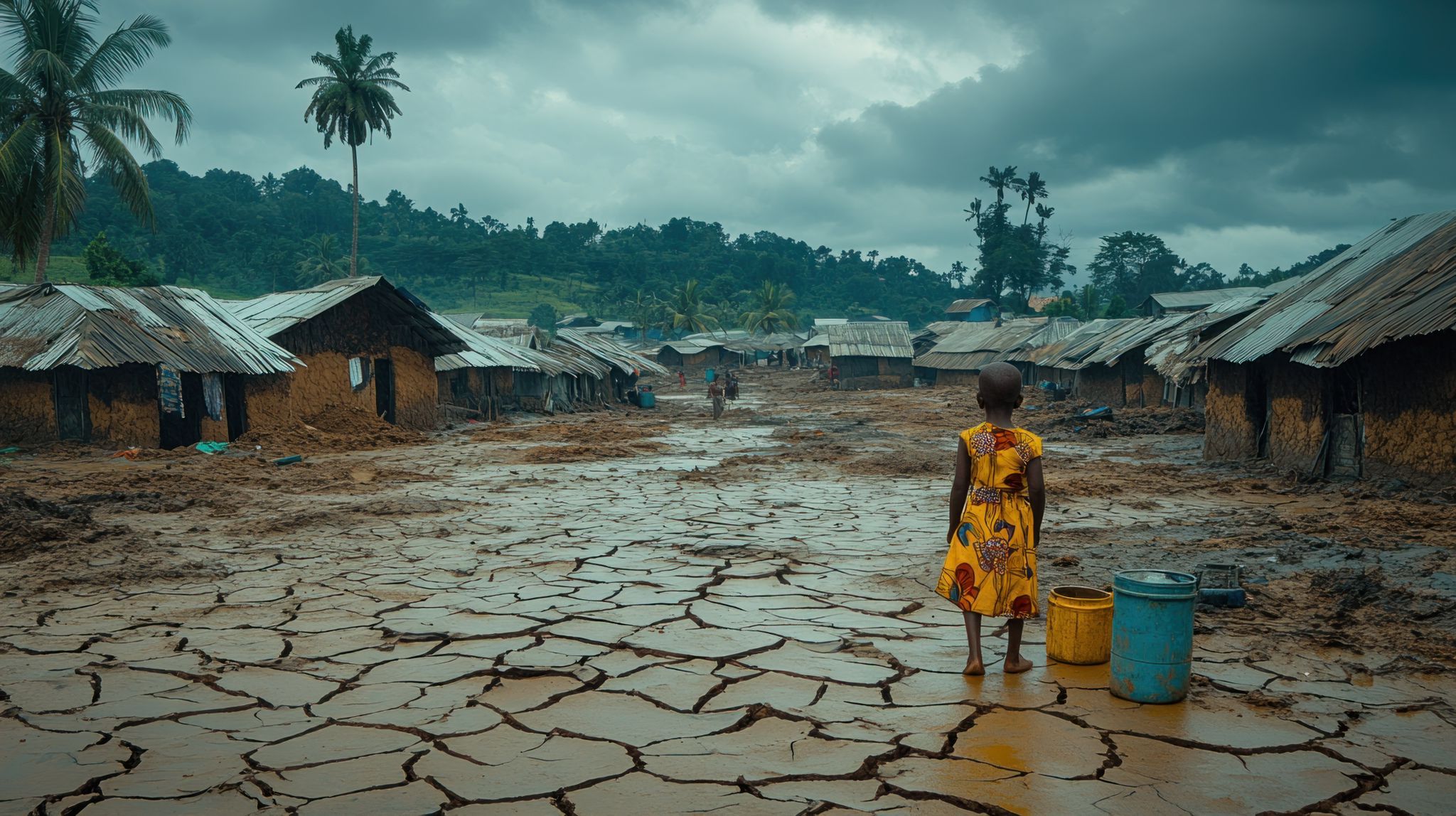
A tailings dam at a cobalt mine called Kasulo collapsed last week in the Democratic Republic of the Congo (DRC), flooding parts of nearby Kolwezi (a major urban area) and possibly contaminating underground water sources which could rapidly spread toxins even further.
At first blush, this incident seems sadly reminiscent of a major contaminant spill earlier this year in neighboring Zambia that sent massive amounts of cyanide and arsenic pouring into a major river, literally “killing” a vital water source servicing millions of Zambian farmers and citizens.
Both cases involve Chinese mining companies which are subsidiaries of larger State-owned conglomerates. Both cases apparently involved at least some attempt to cover-up the incident and or deny responsibility. However, there are important differences that need to be examined.
In the Zambian case, the accused Chinese company owns the mine, which is part of a larger concession in turn owned by another Chinese company.
In the DRC, however, the story is more complex. The Chinese company CDM operates, but does not own, the mine – which remains the property of the Government of the DRC and an affiliate of State-owned miner Gecamines.
The Kasulo copper mine has operated off and on since the 1960’s, first as a property of the Belgian mining company Union Miniere of Haut Katanga (founded in 1906) and subsequently Gecamines, as the company was called following its nationalization in 1967. Gecamines remained a major mining company for decades, peaking in 1986 when it produced a record 476,000 tonnes of copper, 14,500 tonnes of cobalt and 64,000 tonnes of zinc. A major mine collapse, predatory corruption by the government hollowing-out corporate resources and finally the Congolese war conspired to reduce the once-proud company to a shell of its former self. In 2010, Gecamines was ostensibly privatized as an LLC but the government of the Congo retains Board control and effective majority voice in operational decisions.
In an effort to survive and potentially return to its glory years, Gecamines leadership entered into a series of developmental partnerships with various international companies to develop projects it had in its discretionary portfolio. One of these, Kasulo, came back into play in 2015/16 as a property partially owned by trading house Trafigura, which struggled to make the mine work in the face of demands from all sides, including Gecamines, artisanal miners and the DRC government.
In 2019, after Kasulo (along with several other mines near Kolwezi) was virtually overrun by a so-called artisanal army, the government instructed Gecamines to establish a cobalt-focused subsidiary called the General Cobalt Enterprise (EGC) which would focus on providing cobalt mining opportunities for artisanal miners at some of its properties – including the Kasulo mine. Opening Kasulo officially to artisanal mining ratified the de facto reality, since the mine was being worked by free-lance Congolese miners anyway, but also was intended to support the Government’s commitment to provide a more professional and transparent market for artisanal produced cobalt. In 2019, the Chinese company Congo DongFang Mining (CDM) acquired the operational lease from Trafigura/Gecamines and continued operating the property largely with artisanal workers.
Human rights NGOs have consistently flagged issues at Kasulo, ranging from child labor to lack of safety training and equipment to unstable mine structures risking collapse. They had warned that these conditions would preclude ethical certification of the cobalt from the Kasulo Mine, effectively undercutting the government’s efforts to regulate the estimated 2-million strong artisanal sector whose output largely was leaving the country via illegal routes and thereby depriving the DRC government of important revenue.
Ironically, on the heels of last week’s disaster, the EGC announced on November 14 that it had produced its first 1,000 tonnes of fully traceable artisanal cobalt, including product from Kasulo.
So, back to the tailings failure. All the above demonstrates that the question of blame is not straightforward as it was in Zambia. Certainly CDM should have been aware of issues at the tailings site, particularly given two important factors: its overall age and likely unprofessional structure. Certainly it should have been monitoring the situation and attempting to improve the stability of the site, including potentially by closing the old tailings and transfering waste holdings to a new site. It is worth asking if CDM had been doing so, in which case it should present its evidence.
However, the DRC government and Gecamines both are also responsible for this tragedy, and perhaps even more so than CDM, given their years of involvement with the Kasulo mine and the ongoing concerns expressed by NGOs and residents of Kolwezi.
This disaster also flags once again the true complexity and cost of dealing with Congo’s entrenched artisanal miners. They are numerous, aggressive and desperate. They will continue to overrun all or portions of projects being operated by international companies, forcing those companies to decide how to deal with those incursions. So far, no tactics attempted have been successful.
The government should be held responsible for providing training to its citizens who want to work as miners. There once was a thriving School of Mines in Lubumbashi (near Kolwezi). The government should fully fund and staff that institution, with contributions from the private companies operating in the country since clearly having a more professional workforce would be in their interest as well. The government should do a better and more objective job of enforcing the substantial regulations it has for worker safety, including ensuring that companies are providing the necessary safety equipment and that workers – artisanal or otherwise – are trained appropriately in the use of that equipment in a language they fully understand (which usually isn’t either Chinese or English).
The potential extent of risk to citizens of Kolwezi, Congo’s major mining city, is not even limited to air pollution, water pollution, general environmental degradation and excessive truck traffic (to name a few). After generations of free-style mining, substantial portions of the city are built over tunnels that post-dated the construction of the buildings.
Today’s tailings dam collapse and associated disaster is bad enough. Imagine if the world awoke one day to find that significant portions of the city of Kolwezi had disappeared into the sinkhole growing under the city.
Who will we blame then?


Leave a Reply