
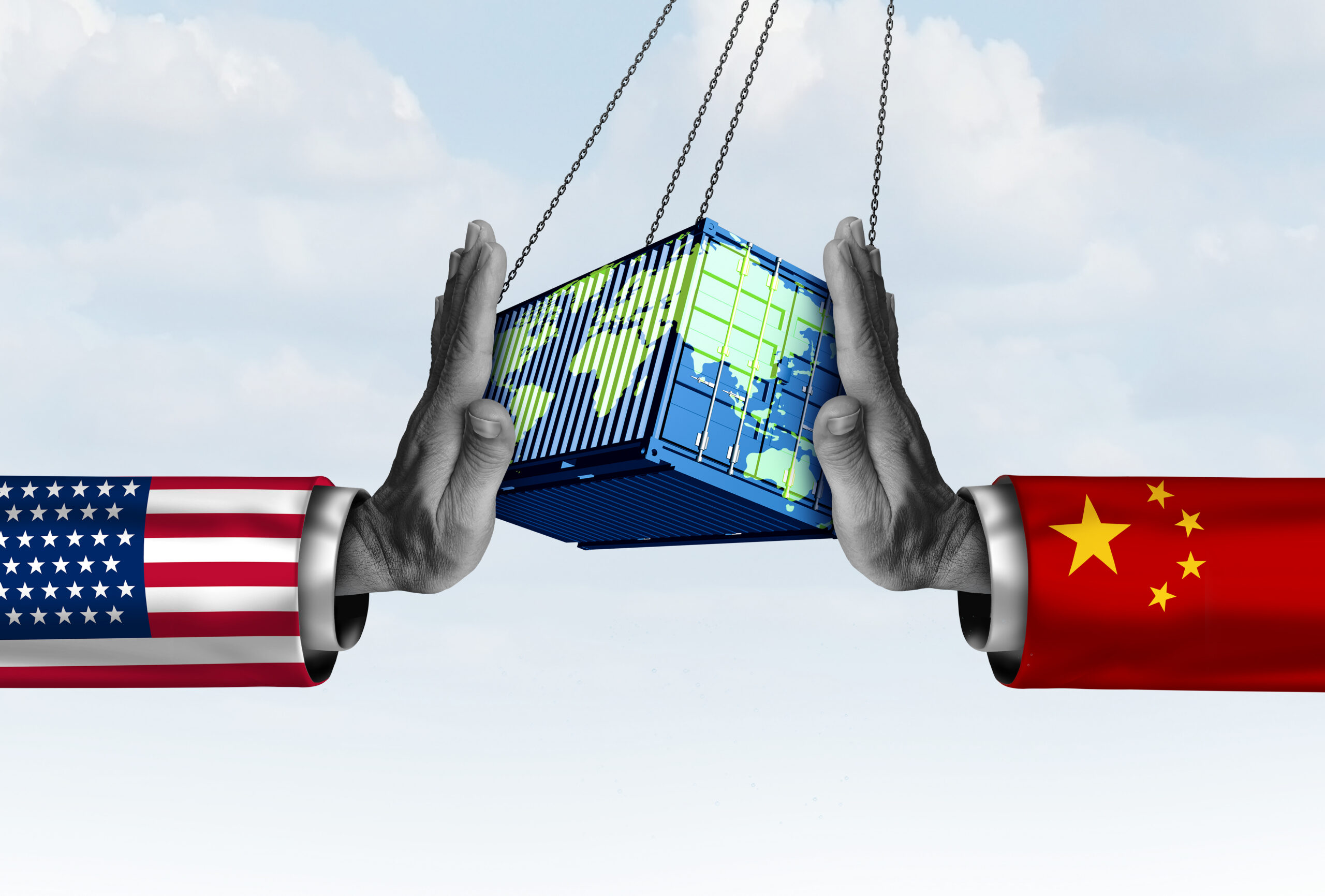
President Donald Trump’s July 20th executive order, Securing America’s Defense Supply Chains and Ensuring Domestic Acquisition of Critical Materials, is built around an unimpeachable objective: the United States should not depend on China, Russia, Iran or North Korea for materials essential to its weapons. Its most consequential provisions, however, are not declarations of policy. They are deadlines—and the assumption that industrial capability can be created quickly enough to meet them.
Beginning January 1, 2027, defense contractors seeking waivers for non-compliant materials will have to document “exhaustive efforts” to find acceptable supplies, demonstrate “active, adequately funded, and ongoing efforts” to qualify domestic sources, and commit to a “strict projected timeline” for eliminating the offending material. Contractors will eventually be required to submit a “complete indentured Bill of Materials” tracing components back to their raw-material origins. Failure to qualify an alternative supplier could become grounds for “suspending or terminating task orders.” These requirements extend through every tier of the defense supply chain.
That final remedy carries unusual weight in defense procurement. “The War Department is single source,” Critical Minerals Institute Co-Chair Jack Lifton said. “There is no backup.” His formulation is deliberately stark, but it captures a structural reality: for many major weapons systems and highly specialized components, the Pentagon relies on a single qualified producer. A commercial manufacturer can often replace a deficient supplier with a pre-qualified competitor; the Department of War may have no equivalent alternative. Terminating a contract may enforce compliance on paper while interrupting production of the aircraft, missile, submarine or guidance system attached to it. This does not excuse fraud or non-compliance, but it means contractual remedies must be calibrated carefully enough to preserve military readiness.
This is not an entirely new prohibition. Section 4872 of Title 10 already restricts the Pentagon’s acquisition of samarium-cobalt and neodymium-iron-boron magnets, tungsten powder and heavy alloys, tantalum and molybdenum connected to the four covered nations. Congress also previously established January 1, 2027, as the date on which the restriction expands upstream to materials mined, refined or separated in those countries. The applicable federal acquisition rule has reflected that deadline since 2024. What the executive order changes is the practical administration of the law: routine waivers become much harder, traceability becomes far more demanding, and contractors are placed under direct pressure to qualify alternatives [Sources: 10 U.S.C. § 4872 | Defense Federal Acquisition Regulation Supplement].
Melissa Sanderson, Co-Chair of the Critical Minerals Institute, identified the correct strategic test: “We need to be incorporating that question of, is this going to be a defensible supply chain?” A supplier located outside China is not necessarily beyond Chinese influence or coercion. Geography, shipping routes, ownership, processing dependencies and political exposure all matter. Substituting one fragile overseas link for another may improve the appearance of compliance without improving resilience.
This is why Canada should occupy a much larger place in Washington’s calculations. Sanderson’s recommendation was characteristically direct: “Source [the materials] in Canada, where [they belong].” Jack Lifton, her fellow CMI Co-Chair, agreed that recent hostility towards Canada was political rather than structural: “It is not an American attitude.” Their broader point is sound. If the objective is a defensible allied supply chain, proximity, shared infrastructure, established security relationships and continental logistics should count for more than diplomatic fashion.
The problem is that traceability is not production. China accounted in 2024 for roughly 60% of mined magnet rare earths, 91% of refined output and 94% of sintered permanent-magnet manufacturing. Those figures describe an industrial ecosystem built over decades: mining, separation, metallization, alloying, powder production, magnet manufacturing, equipment, technical knowledge and customers operating at commercial scale.
An executive order can create demand, compel disclosure and change the economics of procurement. It cannot manufacture metallurgists, commission separation plants or validate new materials by regulatory fiat. “Accelerating the certification process, albeit dangerous, would make sense if the United States had a producing critical minerals industry supply chain,” Sanderson observed.
Her conclusion was blunter: there is no complete pipeline waiting for the paperwork to catch up.
Lifton framed the distinction as one between capacity and capability. “We’ve just given up the capability,” he said. “We don’t have it.” A company may possess a deposit, a proposed plant or even nominal production capacity without being able to deliver a qualified material in the precise form, purity and volume required by a defense contractor. A magnet is not interchangeable simply because it contains the correct elements. Its performance must be demonstrated under heat, vibration, corrosion, load and time. In military systems, qualification is part of the product.
The Pentagon itself said in March 2024 that it was “on track to meet our goal of a sustainable, mine-to-magnet supply chain capable of supporting all U.S. defense requirements by 2027.” At the time, the Pentagon said it had awarded more than $439mn to rare earth separation, refining, metal and magnet projects. The July order suggests that investment alone has not resolved the qualification and provenance problem—or at least that the administration is unwilling to rely on voluntary progress.
The order instructs the Secretary of War to develop a strategy within 90 days to accelerate testing and qualification, including identifying regulations that might be rescinded. Some procedures may indeed be needlessly slow. Sanderson described the current process as “ponderously slow,” noting that a new producer may wait years to become an approved supplier. But qualification cannot be treated simply as bureaucratic obstruction. Compressing administrative delays is useful; compressing physical testing without an equivalent method of establishing reliability transfers supply-chain risk into weapons performance.
The sequencing is also awkward. Waivers are to be sharply restricted on January 1, yet the department has up to 180 days to develop its supply-chain mapping policy and another 90 days to promulgate implementing regulations. At the outer limit, contractors could face the new waiver regime before receiving the complete rules governing traceability and compliance. The largest primes may absorb that uncertainty. Smaller suppliers and new entrants—the very companies Washington says it wishes to cultivate—may struggle with the cost of reconstructing provenance across products designed years earlier.
The order should therefore be judged neither as a breakthrough nor as mere political theatre. It is a powerful demand signal and a potentially valuable exercise in supply-chain illumination. It may force contractors to confront dependencies that have been tolerated for too long. It may also direct more capital towards American, Canadian and allied producers able to satisfy the provenance requirements.
But the danger is equally clear. If Washington restricts waivers faster than it qualifies real alternatives, it will not have eliminated foreign dependence. It will have converted that dependence into procurement delays, higher costs and possible interruptions to military production. “This makes no sense at all,” Lifton warned, “because it’s interfering with military production.” That outcome is not inevitable, but the order leaves too little room for complacency.
The measure of success will not be how many waivers the government refuses or how many bills of materials contractors submit. It will be whether qualified tonnes of compliant material reach defense manufacturers without slowing the delivery of weapons. America can order contractors to reveal a supply chain. Building one remains the harder task.


Leave a Reply