
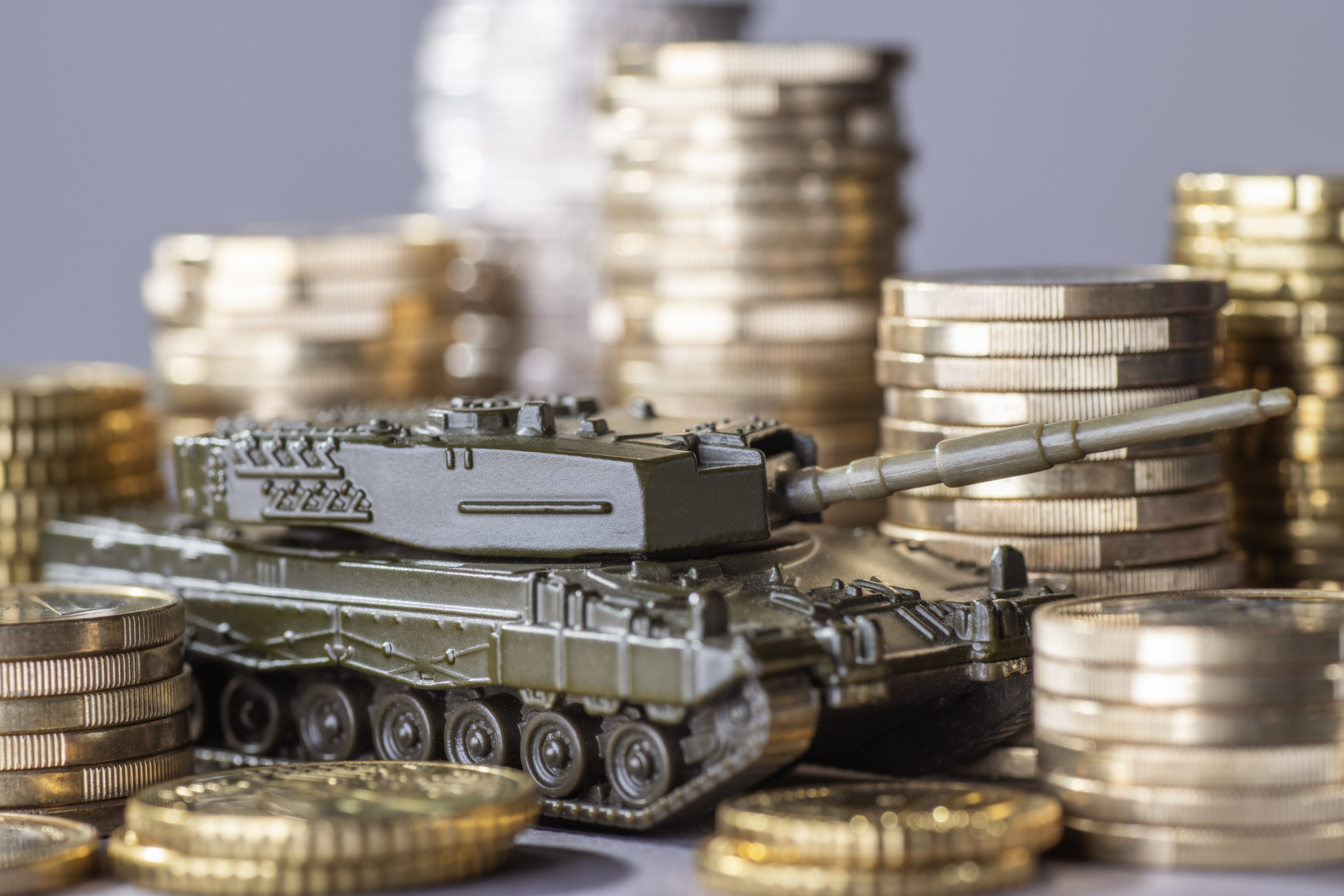
There are reports that describe a market. And then there are reports that quietly expose it.
Christopher Ecclestone’s latest Hallgarten note—Europe & Critical Metals: Poised for Action or Jawboning?—falls firmly into the latter category.
At first glance, it reads like a familiar critique: Europe talks a good game on critical minerals but struggles to execute. But beneath that framing is something far more consequential—a reframing of what actually matters now in the critical minerals economy.
Not lithium. Not ESG narratives. Not even the energy transition.
War.
Ecclestone’s central insight is disarmingly simple: strip away the “padding” from critical minerals lists, and a far narrower, more urgent group emerges—tungsten, antimony, tin, rare earths, and helium. These are not fashionable metals. They are functional ones. They are the inputs of munitions, electronics, and industrial resilience. They are, increasingly, the metals of a rearming world.
And here, Europe finds itself in a paradox.
On paper, it is dangerously dependent—on China for processing, on external partners for supply, and on its own bureaucracy for delay. The Critical Raw Materials Act (CRMA) is ambitious, targeting 10% domestic extraction and 40% processing by 2030, but ambition is not execution.
In practice, however, Europe is not as resource-poor as it pretends to be.
Spain and Portugal sit atop meaningful tungsten potential. Scandinavia and Central Europe host rare earth infrastructure that, as Ecclestone notes, “puts the US to shame.” Tin is quietly re-emerging in Cornwall. Antimony, long written off, remains embedded across Slovakia and Iberia.
The issue is not geology.
It is will.
Ecclestone is unsparing on this point. Europe’s greatest vulnerability is not China—it is NIMBYism, regulatory inertia, and what he characterizes as a political class more comfortable with “slogans, buzzwords and soundbites” than mines. The “Circular Economy,” once positioned as a solution, is dismissed as a delaying tactic—recycling cannot substitute for primary supply when demand is surging and stockpiles are depleted.
And demand is not theoretical.
Two active conflicts, combined with a structural rearmament cycle, are driving real consumption of tungsten and antimony. This is not the energy transition’s slow burn—it is immediate, industrial demand tied to national security.
That shift has profound implications for capital.
Investors, Ecclestone observes, are no longer rewarding “perpetual drillers.” They are backing developers—projects that can move from resource to production in a compressed timeframe. This is a critical distinction. In a world where supply chains are weaponized, optionality has less value than deliverability.
It also explains why certain metals—long ignored—are now experiencing violent price swings. Antimony’s spike to US$60,000 per tonne, followed by a sharp correction, is not volatility for its own sake. It is a signal: supply chains are thin, opaque, and easily disrupted.
And perhaps most provocatively, Ecclestone challenges the prevailing narrative around Chinese dominance.
Yes, China controls processing. Yes, it can manipulate pricing. But in many cases, it does not control the underlying geology. Europe, he argues, could replace portions of that supply—if it chose to.
That “if” is doing a great deal of work.
Because the report ultimately lands on a familiar, uncomfortable conclusion: Europe understands the problem but has yet to act with the urgency it demands. The CRMA is a framework. Strategic projects have been identified. Partnerships are being discussed. But execution remains uneven, and in some cases, misguided—overweight lithium, underweight military metals.
Meanwhile, the United States is experimenting with mechanisms like “Project Vault,” blending public and private capital into a demand-driven strategic reserve. Whether that model succeeds is secondary. What matters is that it exists.
Europe, by contrast, is still debating.
There is a tendency in this sector to focus on discovery—on the next deposit, the next jurisdiction, the next story. Ecclestone’s report is a reminder that the real story is structural.
Who produces.
Who processes.
Who decides.
And increasingly, who is prepared.
For readers in the critical minerals space—whether operators, investors, or policymakers—this is required reading.
To access the complete report, click here


Leave a Reply