
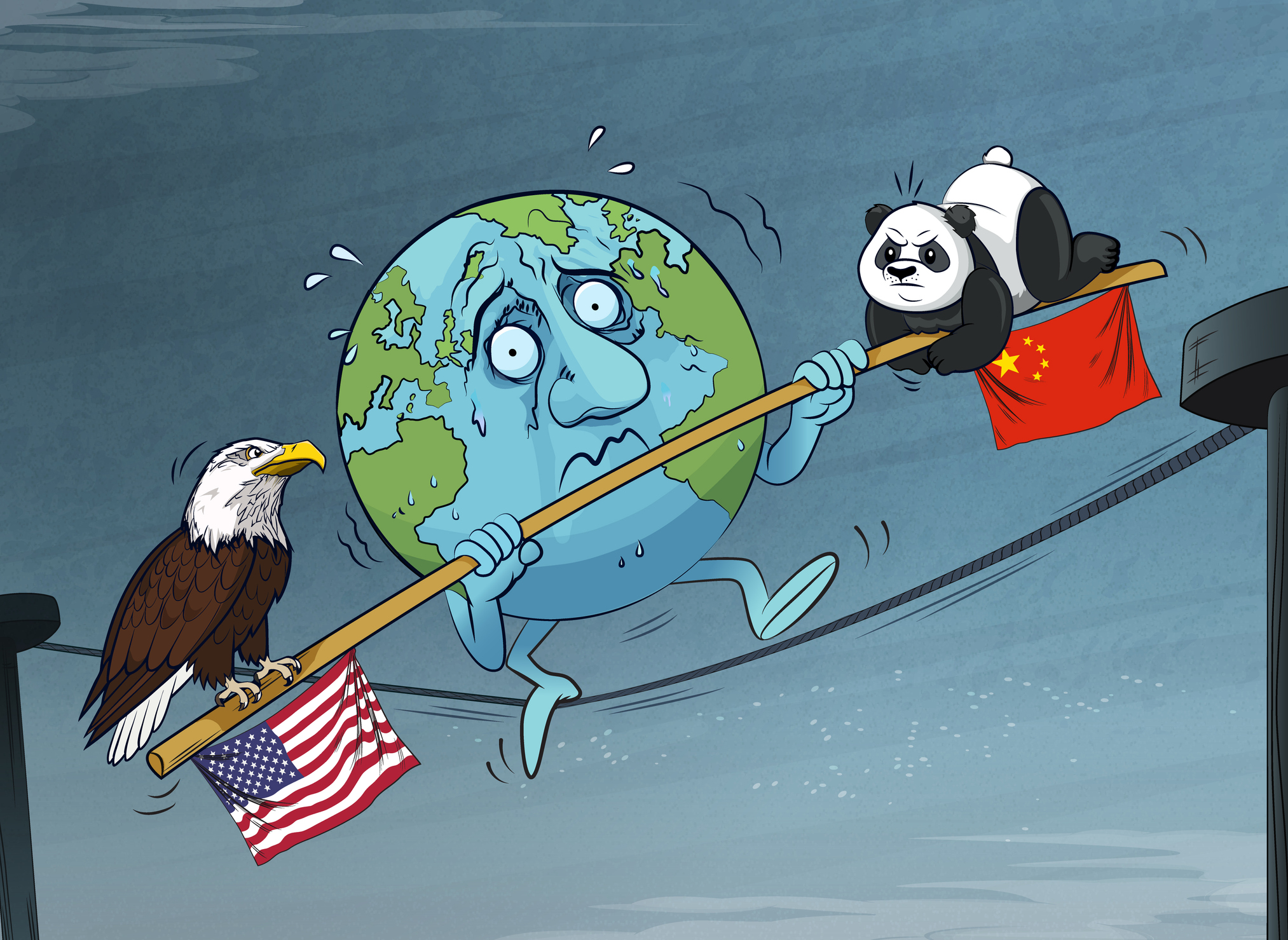
“The countdown to November is not simply about whether China keeps shipping critical minerals; it is about whether the United States uses the time it has been given to rebuild the industrial capabilities it surrendered. China can impose immediate pain by restricting supply, but every denial gives customers another reason to qualify new suppliers, redesign products and finance competing supply chains. The paradox is that the more forcefully China uses its dominance as leverage, the more valuable—and urgent—it becomes for the rest of the world to end that dominance.” — Jack Lifton, Critical Minerals Institute (CMI)
The question I am asking is straightforward: As China approaches its November deadline to continue or terminate the temporary reprieve on exports of critical metals and materials to the United States, what would either decision mean for the economies of both countries—in the short term and over the longer term?
My answer is that continuing the reprieve serves the immediate economic interests of both countries. Terminating it would likely cause greater immediate industrial disruption in the United States, but it would also strengthen the incentive to dismantle the dependence that gives China its leverage. China can restrict access to materials. It cannot assume that customers denied those materials will remain customers indefinitely.
First, however, we need to be precise about the deadline. There are two relevant dates: (1) November 10, 2026, is the expiration date for the suspension of the broader October 2025 export control measures. These cover additional rare earth materials, equipment, and technology; certain overseas rare earth transactions; superhard materials; and specified battery and artificial graphite items. They are not a blanket prohibition on all critical minerals exports. And (2) November 27, 2026, is the expiration date for the separate suspension of the U.S.-specific presumption against approving exports of gallium, germanium, antimony and superhard dual-use materials, together with stricter reviews of graphite exports. The separate prohibition on exports for U.S. military users or military purposes was not suspended.
That distinction matters. An export license that takes longer to obtain creates a particular economic problem. An export license that will not be issued creates another. For this discussion, I regard the short term as roughly the first year following the decision, and the long term as the following three to ten years.
If China extends the reprieve, American manufacturers gain something more valuable than a temporary reduction in raw-material prices: greater confidence that they can continue producing.
The economic significance of a critical material is not measured by its purchase price. A relatively inexpensive input can determine whether a very expensive product can be completed and sold. If the required material is unavailable in the correct form, purity, and quantity, the value of the unfinished product does not solve the problem. Continued access would reduce pressure on American companies to hoard inventory, find emergency suppliers or redesign products before alternatives have been qualified. It would support production and investment while giving the United States more time to develop other sources.
China would preserve sales, factory utilization and customer relationships. Its broader manufacturing economy would also benefit from avoiding disruptions among foreign customers and suppliers. But renewal contains a longer-term problem for the United States. Readily available Chinese material can weaken the economics of competing projects. A manufacturer has little commercial incentive to commit to a more expensive alternative if it expects Chinese supply to remain available. The reprieve therefore buys time. Whether that time produces greater independence depends on what American industry and government do with it.
If diversification stops whenever prices fall or diplomatic relations improve, dependence will persist. For China, this is one of the strongest economic arguments for continuing the reprieve. Reliable, competitively priced supply helps preserve its market position.
Now consider termination. The initial American response would likely be higher prices, precautionary purchasing, and greater uncertainty over deliveries. Production interruptions would emerge unevenly as companies exhausted inventories. Some would find alternatives. Others would discover that an alternative supplier of a mineral is not necessarily a qualified supplier of the material or component their factory requires.
Rare earths illustrate the distinction. According to the International Energy Agency, China accounted for 91% of refined magnet rare-earth output and 94% of sintered permanent-magnet production in 2024. Opening a mine elsewhere does not, by itself, replace that industrial system. The severity of the damage would depend on the breadth and administration of the restrictions. Restored licensing with timely approvals is substantially different from sustained denials. A disruption extending through magnets, battery materials, equipment, and processing technology would reach further than restrictions on a few metals alone.
The U.S. Geological Survey provides one indication of the potential scale. Its 2024 model estimated a $3.4 billion reduction in U.S. GDP from a complete restriction of China’s net gallium and germanium exports, with a range of $1.7 billion to $9 billion. That is a model of two materials under specified assumptions, not a forecast for the entire November decision.
China would also incur costs. Exporters would lose business. Material retained domestically could put pressure on producer margins while benefiting Chinese downstream manufacturers. Where exports of finished products remained permissible, those manufacturers might gain an advantage over foreign competitors struggling to obtain inputs. Yet disrupted foreign customers buy less, and retaliation could carry the conflict into other industries. China’s economic exposure extends beyond the value of the minerals it withholds.
Over time, sustained restrictions would make alternative supply chains more attractive—and more politically urgent. Investment in refining, separation, recycling, substitution and component manufacturing would become easier to justify. That does not mean independence would arrive quickly. Capital must be accompanied by operating expertise, qualified products and customers willing to make durable purchasing commitments.
For investors, this distinction is essential. A higher mineral price does not turn a resource into a functioning industrial supply chain. A restriction may improve a project’s prospective economics without resolving its financing, processing or execution risks. The United States could eventually gain greater resilience, but at the cost of additional investment, inventories and potentially higher manufacturing costs. Those expenditures are the price of reducing vulnerability, not evidence that the disruption itself creates prosperity.
China, meanwhile, would risk accelerating the development of its future competitors. Once customers qualify another supplier or redesign a product, some business may not return even if restrictions are subsequently lifted.
My conclusion is that extending the reprieve is the better economic choice for both countries. Ending it could give China greater immediate bargaining power, while encouraging the industrial investment that ultimately reduces that power. The November decision should therefore be judged by what follows it: which materials actually move, which customers receive approvals, and whether alternative supply chains continue to develop.
For the United States, the test is whether it uses continued access to build lasting resilience. For China, the test is whether the immediate value of restricting supply exceeds the long-term value of remaining the supplier.


Leave a Reply