
I first started looking more closely at Emerita Resources Corp. (TSXV: EMO | OTCQX: EMOTF | FSE: LLJA) after seeing David Patterson named as the Chair.
David Patterson, who became the Chair of Emerita Resources Corp. in 2026, is a veteran mining and capital markets executive whose career has focused on financing and advancing publicly listed resource companies across North America. As Executive Chairman of Donner Metals Ltd. (TSXV: DON | Frankfurt: D4M), Patterson played a central role in advancing the Bracemac–McLeod deposit in Québec’s Matagami mining camp toward production alongside Xstrata plc (LSE: XTA | SIX: XTA) — one of the world’s major diversified mining companies prior to its merger with Glencore. Bracemac–McLeod was itself a volcanogenic massive sulphide, or VMS, system with geological characteristics comparable to Spain’s Iberian Pyrite Belt. That background matters. Executives with deep experience in VMS systems and mine development tend to recognize the difference between speculative geology and district-scale potential.
That matters.
In mining, experienced people rarely gravitate toward projects without reason. And when individuals with deep capital markets and VMS experience reappear around a district-scale polymetallic system in Europe, it is usually worth paying attention.
What I found was not a simple junior exploration story.
Emerita Resources Corp., formerly Emerita Gold Corp., sits at the intersection of European critical minerals, regulatory scrutiny and one of the most historically productive volcanogenic massive sulphide — or VMS — districts in the world: the Iberian Pyrite Belt.
VMS systems matter because they can host dense concentrations of zinc, copper, lead, silver and gold within a single mineralized environment. In an era increasingly shaped by electrification, industrial policy and supply-chain security, polymetallic systems of scale are attracting renewed strategic attention.
In mining, complexity and value often travel together.
Emerita formally adopted its current name in 2014 as the company shifted toward mineral development opportunities in Spain. Today, it describes itself as a Canadian mineral exploration and development company focused primarily on polymetallic deposits in southern Spain.
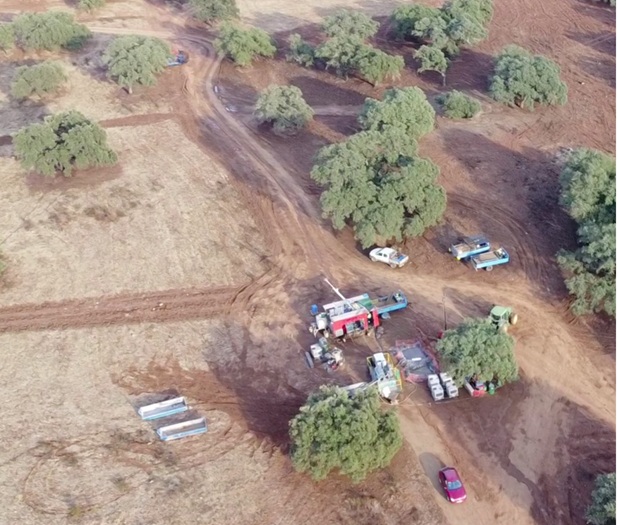
Its flagship asset is Iberian Belt West, commonly referred to as IBW, located in Andalucía within the Iberian Pyrite Belt — a geological district that has produced metals since Roman times and remains one of Europe’s richest concentrations of zinc, copper, lead, silver and gold mineralization.
Scale is what separates geological curiosity from strategic relevance.
According to company disclosures, IBW hosts nearly 19 million tonnes of indicated resources grading 8.44% zinc equivalent, along with additional inferred resources. The El Cura deposit, one of three principal deposits within the IBW system, has also demonstrated meaningful copper and gold enrichment that could materially improve future project economics if advanced toward production.
Still, mining is a business where narratives often outrun outcomes.
A resource is not a mine.
And geological potential alone does not guarantee financing, permitting or successful development.
That distinction becomes especially important in junior mining, where market enthusiasm can move faster than engineering studies, environmental approvals or metallurgy.
Even so, Emerita has advanced further than many exploration-stage companies ever manage to reach.
In May 2026, the company announced that the environmental authorization process for the exploitation permit at Iberian Belt West had entered the public consultation phase — an important milestone within Spain’s permitting framework. Public consultation in Europe is not merely procedural; it is often where geology intersects with politics, local communities, environmental oversight and social license.
Yet geology is only part of the investment thesis.
The other is governance.
In April 2026, the Ontario Securities Commission initiated enforcement proceedings involving Emerita and several former officers and directors in connection with historical matters tied to the Falcon lithium project in Brazil and disclosure surrounding the Plaza Norte zinc project in Spain.
According to the Ontario Securities Commission application for enforcement proceedings, the regulator alleges that certain former insiders benefited from opportunities connected to the Falcon project and that aspects of historical disclosure surrounding Plaza Norte were misleading. The allegations remain unproven.
The OSC further alleges that between 2021 and 2022, several former Emerita insiders — including former CEO David Gower, former chairman Larry Guy, Sergio Lopez and Gregory Duras — together with Brazilian mining entrepreneur Hélio Diniz, participated in conduct that ultimately resulted in the Falcon lithium claims becoming associated with Lithium Ionic Corp. (TSXV: LTH | OTCQX: LTHCF | FSE: H3N).
For junior mining companies, governance is not peripheral to valuation. It is part of valuation.
Resource markets ultimately depend on confidence: confidence in geology, confidence in title and confidence in management. Questions surrounding disclosure, ownership or fiduciary conduct can materially influence how investors value even high-quality mineral systems.
One aspect of the OSC application is the allegation that, although Emerita exercised its option on the Falcon project in 2018, title was allegedly never transferred to Emerita or its nominee. The significance of that issue may ultimately become an important point in the proceedings.
Emerita has stated publicly that the allegations remain unproven, that the matters relate primarily to historical projects and former management, and that the company has strengthened governance and disclosure controls following the period in question.
And that may ultimately be the real investment question surrounding Emerita.
Few junior mining companies manage to combine district-scale geology, European critical minerals exposure and advanced permitting progress within one of the world’s most historically productive VMS belts. Iberian Belt West is no longer simply a conceptual exploration target. It is increasingly becoming a development story.
But mining markets rarely price geology alone.
They also price confidence.
Ultimately, the Emerita story may be decided not only by what lies beneath the Iberian Pyrite Belt, but by how much confidence investors place in the people attempting to develop it.


Leave a Reply