
“China did not spend thirty years simply buying mines; it spent thirty years securing processing, metallurgy and the customer. The West asked who owned the ore. China asked who controlled the supply chain.” — Jack Lifton, Co-Chair, Critical Minerals Institute (CMI)
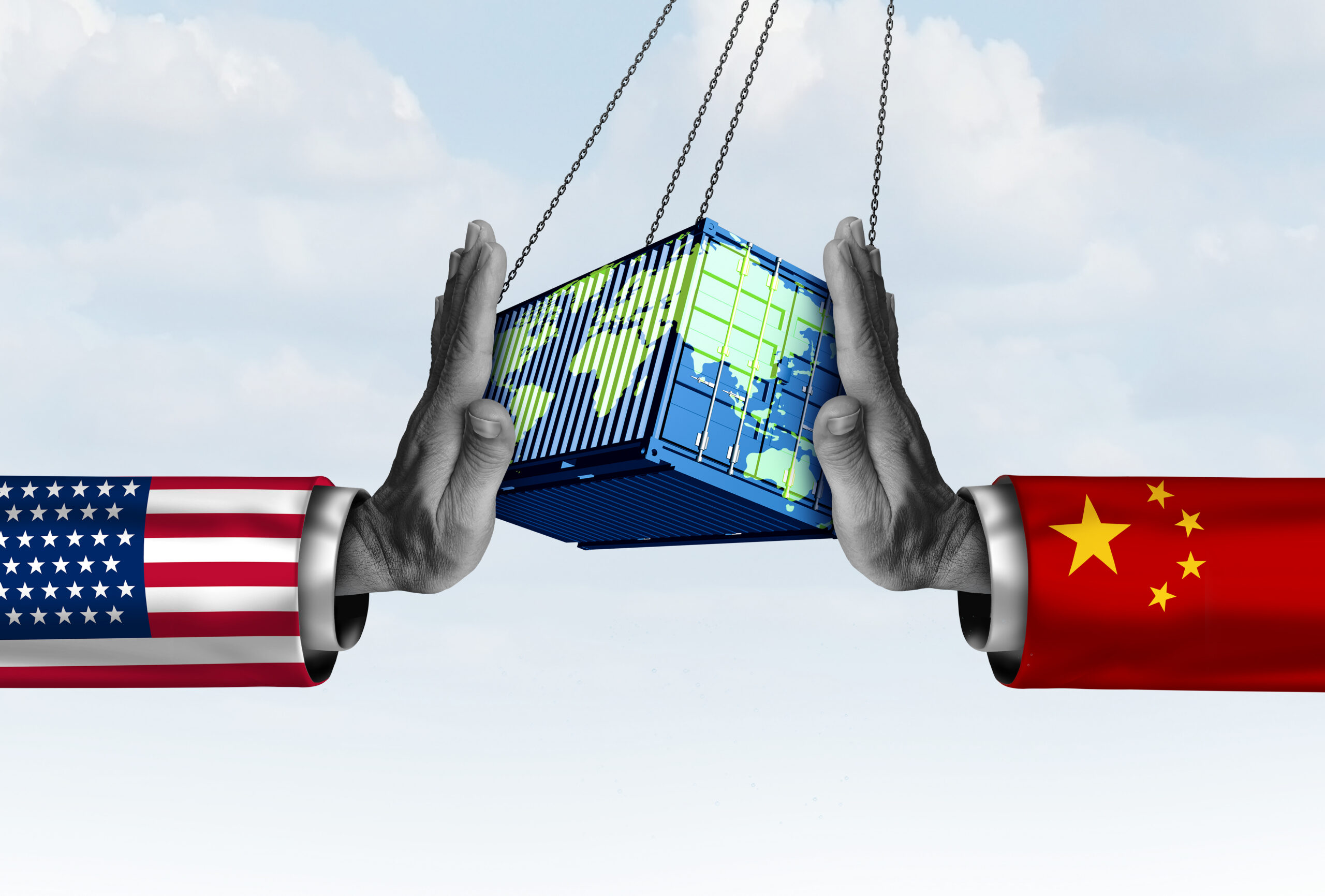
Is China embarking on a new era of critical mineral diplomacy, or are its actions consistent with the past but previously unnoticed in the West?
The short answer is that China is not inventing a new strategy; it is revealing one that it has been pursuing for at least thirty years. What has changed is not Beijing’s behavior, but Western perception.
There is a tendency in Washington, Brussels, Ottawa, and Canberra to describe every new Chinese investment, export restriction, or overseas processing agreement as evidence of a “new era” of critical mineral diplomacy. I think that characterization misses the larger historical picture.
China’s critical minerals strategy has always been diplomatic as much as it has been industrial.
The First Era: Securing Resources (1980s–2000s)
During the 1980s and 1990s, China recognized something that most Western governments ignored: minerals themselves were only part of the value chain. The objective was never simply to own mines. Instead, China sought to secure long-term access to: mineral concentrates, processing technology, metallurgical expertise, engineering talent, and ultimately manufacturing customers.
Its investments in Africa, Southeast Asia, Australia, and South America were not isolated mining investments. They were elements of an industrial strategy. While Western companies concentrated on quarterly earnings, Chinese institutions concentrated on thirty-year supply chains.
The Second Era: Control of Processing
Once access to raw materials had been secured, Beijing encouraged enormous investment in solvent extraction, metal production, alloy production, magnet manufacturing, battery materials, and specialty chemicals.
This is where the West largely stopped paying attention. Mining conferences continued discussing deposits. China quietly built refineries. The result today is obvious. China produces only a minority of several critical minerals by mine output but dominates the higher-value processing stages for many of them. That outcome was not accidental.
The Third Era: Supply Chain Diplomacy
Today’s actions in Malaysia, Indonesia, Africa, Central Asia, and South America are often portrayed as aggressive geopolitical expansion. They are. But they are also entirely consistent with what China has always done. The difference is that today China exports industrial ecosystems rather than merely buying raw materials. Instead of asking, “Can we buy your ore?” China increasingly asks, “Can we help build your industrial base—using Chinese technology, Chinese engineers, Chinese financing, Chinese equipment, and Chinese customers?”
Export Controls as Diplomacy
That is diplomacy through industrial dependence.
Many Western observers interpreted China’s recent export controls on gallium, germanium, graphite, rare earths, and magnet technologies as a sudden policy reversal.
I do not.
They represent the logical consequence of spending decades becoming indispensable.
Countries rarely weaponize assets they do not dominate.
China spent thirty years creating that dominance.
Only now has it begun using it openly.
Why the West Missed It
The Western analytical framework has been heavily influenced by mining. China’s framework has been influenced by manufacturing. Mining analysts asked: Who owns the deposit? Chinese planners asked: Who owns the customer? Those are entirely different questions. One evaluates assets. The other evaluates industries.
This distinction explains why so many Western “mine-to-magnet” announcements misunderstand how industrial supply chains actually develop. Ownership of a mineral deposit is not what creates industrial power. The ability to deliver qualified materials that OEMs require—consistently, at competitive cost, and at commercial scale—is what creates durable competitive advantage.
Is Anything Actually New?
Yes—but not in China’s objectives. The new elements are: greater willingness to use export controls strategically; more explicit integration of industrial policy with foreign policy; closer coordination between state financing, diplomacy, and commercial enterprises; growing emphasis on overseas processing rather than simply overseas mining; recognition that countries outside China increasingly want domestic processing capability, creating opportunities for Chinese partnerships rather than outright ownership.
These are evolutionary changes, not revolutionary ones.
The Coming Competition
The real competition is no longer over who discovers the next rare earth deposit. It is over who becomes the preferred supplier to manufacturers. China understands that qualification, reliability, metallurgy, and manufacturing integration determine industrial success. Many Western governments are only beginning to appreciate this reality. That is why I believe investors should be skeptical whenever they hear claims that a mining company will build an entire “mine-to-magnet” supply chain. Mines do not create industries. OEM procurement does. The companies most likely to succeed will be those that solve manufacturers’ procurement problems by delivering qualified materials, not simply by owning attractive mineral deposits.
My Conclusion
I would argue that we are not witnessing the birth of a new era of Chinese critical mineral diplomacy. We are witnessing the end of an era in which the West failed to recognize what China was already doing. For more than three decades, Beijing pursued a coherent industrial strategy that integrated geology, metallurgy, manufacturing, finance, trade, and diplomacy. Western policymakers often analyzed these activities separately—as mining policy, trade policy, or foreign aid—while China treated them as parts of a single system.
The surprise, therefore, is not China’s behavior. The surprise is that so many in the West only noticed the strategy after China had already achieved a commanding position in much of the critical minerals value chain. That realization should change how governments, investors, and OEMs assess future opportunities: the decisive question is no longer who owns the ore, but who controls the industrial capabilities that transform it into qualified materials manufacturers are willing to buy.


Leave a Reply