
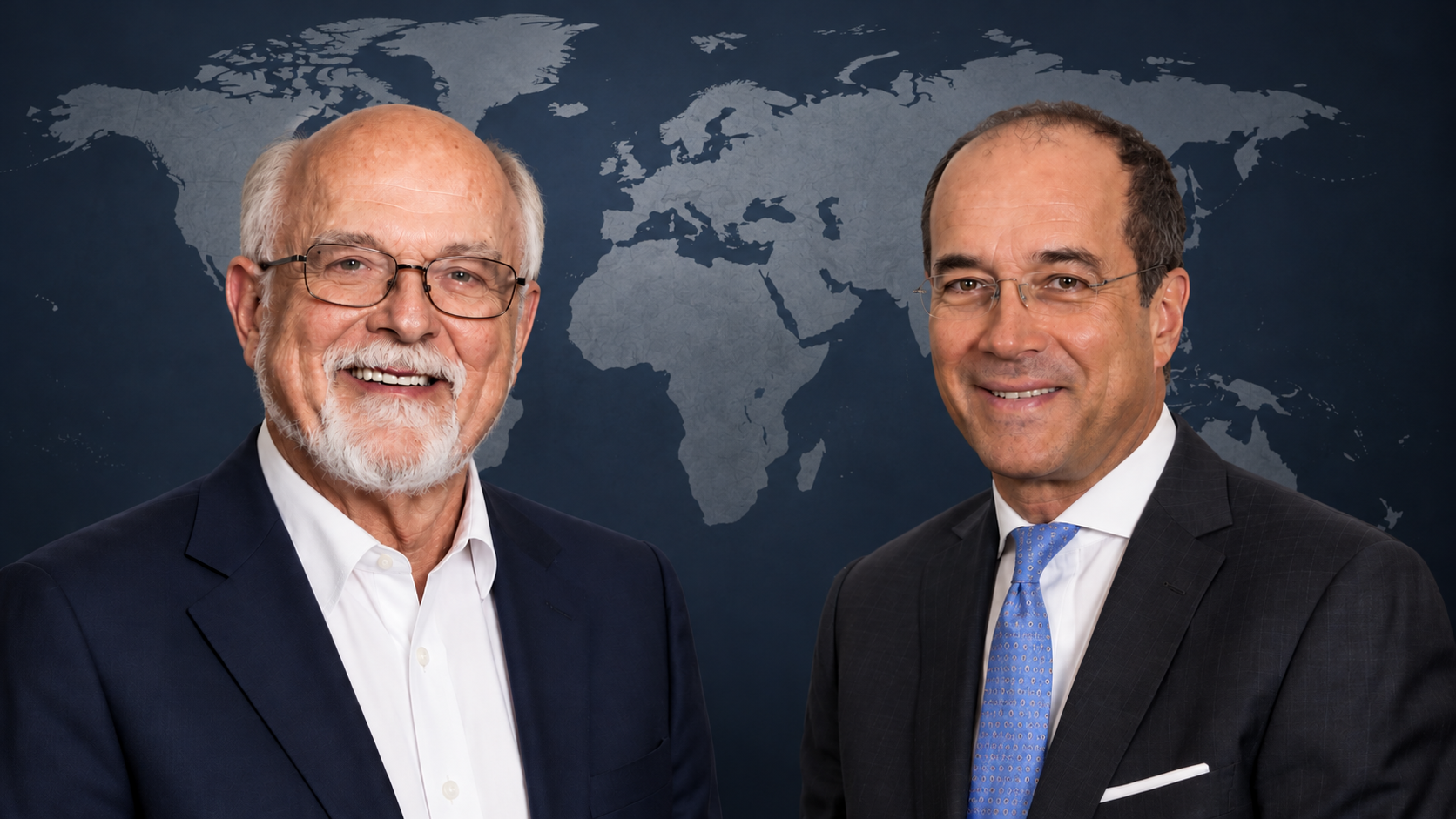
Jack Lifton and Constantine Karayannopoulos Respond to the Aerospace Industries Association’s Report on Critical Minerals Supply Chains
A Letter from the Publisher: Co-written by world-renowned critical minerals experts Jack Lifton and Constantine Karayannopoulos, this column responds to the Aerospace Industries Association’s Strengthening Critical Minerals Supply Chains report. The authors examine the purchasing commitments that aerospace and defense manufacturers and their government customers must make to establish and sustain commercially viable alternative suppliers.
The September 2026 Aerospace Industries Association (AIA) report, Strengthening Critical Minerals Supply Chains, explains why replacing existing suppliers is difficult. Its explanation deserves attention. But its principal policy emphasis is on adjusting deadlines, preserving waivers, and reducing compliance burdens. We believe the more important question is what the aerospace and defense industry’s customers and principal contractors will commit to purchasing, at what price, and for how long, so we can actually build the missing industrial capacity. The issue is not simply the availability of critical minerals. It is the commercial viability of the businesses required to transform those minerals into qualified industrial products.
Our combined industrial experience has taught us the difference between an interest in a material and an order for a qualified product. The former can produce meetings, announcements, government programs, and stock market enthusiasm. The latter, if its terms are credible, can support investment in equipment, people, and production. A secure supply chain begins with the original equipment manufacturer’s requirements and works backward through the businesses that can meet them. Supply chains are pulled by demand. You can’t assemble them by financing a collection of mineral discoveries and hoping their output eventually finds a customer several links down the supply chain.
Fairness requires acknowledging what the AIA actually says. Its members report supplier investments, qualification assistance, longer-term agreements, material buffers, and payments of substantial spot premiums. One anonymous example describes securing material at more than thirty times historical prices. The report also recognizes that processing, refining, and manufacturing are often the real bottlenecks. It would therefore be inaccurate to say that these companies have done nothing or that the association ignores the industrial problem. Our criticism concerns the conclusions it draws from that problem and the obligations it emphasizes in response.
On page 22, the AIA essentially absolves the industry’s effort of responsibility for the absence of compliant material. We believe that conclusion is too broad for an anonymized member survey to support. A survey can document what companies are encountering today. It cannot, by itself, determine whether earlier purchasing decisions, contract structures, or unwillingness to support enduring alternative suppliers helped produce today’s shortages. The distinction matters because a supplier’s absence is sometimes the accumulated result of customers declining to make that supplier’s business financeable.
Qualification is a real industrial requirement. An aerospace magnet must deliver the required magnetic performance, temperature resistance, dimensional tolerances, and consistency, with documented production controls. A laboratory sample or a certificate of oxide purity does not establish that capability. AIA describes qualification periods of twelve to twenty-four months after suitable material becomes available, and some source transitions costing more than ten million dollars. We accept that these constraints can justify carefully defined transition relief. Governments and financial markets cannot suspend economic reality.
But the same economic reality applies to the producer. A company cannot finance a specialty separation line, a metal-making operation, or a magnet factory on the promise that customers will consider buying its output when it matches the price of the dominant Chinese supplier. If the customer needs independence from China, the purchase agreement must reflect the economic value of that independence. Otherwise, the producer is being asked to supply an additional service, security of supply, for which the buyer has assigned no durable revenue. The producer must undertake the capital risk while the customer retains the option to return to the lowest-priced supplier whenever circumstances permit.
Our argument is not that Western manufacturers should ignore costs or that governments should subsidize inefficiency indefinitely. Security of supply has an economic value that the purchasing agreement must recognize. The decision to maintain an alternative supplier is both commercial and strategic. If a manufacturer regards a reliable source of critical materials outside China as essential to its continuing operations, it must be prepared to support that source through purchasing commitments that allow the supplier to earn a reasonable return on productive capital at the required scale.
A useful example comes from Constantine’s direct industrial experience. In 2020, a major European automobile manufacturer, driven by the need for a local, resilient supply of rare earth permanent magnets, approached Constantine and Energy Fuels’ (NYSE American: UUUU | TSX: EFR | ASX: EF2) CEO, Mark Chalmers, about the possibility of manufacturing magnets in Europe using byproduct feed materials originating in Utah. The proposed industrial chain would involve refining and converting these materials into magnets in Estonia. Constantine explained that such an investment would not be economically justified if the automaker insisted on paying Chinese prices. The automaker would need to pay a premium over Chinese pricing and pass that premium through the successive tiers of its component supply chain.
According to Constantine’s recollection, agreement on this commercial principle, combined with public capital assistance, allowed the proposed Narva magnet manufacturing project to exceed the company’s cost of capital and the Neo board’s investment hurdle rate. The essential change was not the discovery of a new mineral deposit or the announcement of a new processing technology. It was an industrial customer’s recognition that supply-chain resilience had a price, and that the customer would have to help pay it. The procurement commitment changed the economics of the proposed investment.
The public record supports the project’s subsequent industrial progress and provides more precise details on its financing. Neo Performance Materials Inc. (TSX: NEO | OTCQX: NOPMF) announced in November 2022 a Just Transition Fund grant of up to €18.7 million, based on eligible project costs of up to €100 million. It subsequently announced an Export Development Canada credit facility of up to US$50 million for construction and commissioning. Neo broke ground for its new facility in July 2023, started earthworks in September 2023, started commissioning in December 2024, and shipped its first 18,000 magnets for customer evaluation in April 2025. Narva involved public assistance and financing as well as customer commitments. The combination, not any single component, made the investment commercially attractive.
On September 14, 2026, Neo reported that the Narva facility had completed automotive qualification for its initial programs and begun commercial shipments to a Tier 1 electric vehicle traction-motor customer. It also reported awards from three Tier 1 motor manufacturers and expected two to three programs to reach commercial production by year-end. Its initial nameplate capacity is approximately 2,000 metric tons annually. That capacity is a design rating, not evidence of actual annual output. Automotive qualification also does not qualify a facility for a defense application. These distinctions matter because announcing a facility, completing qualification, and achieving sustained commercial production are separate industrial milestones.
Nevertheless, an operating plant delivering qualified commercial products for use in commercially manufactured electric vehicles is a meaningful result. The lesson we draw from Narva is a method, not a universal subsidy ratio or a claim that every critical material can follow the same timetable. Define the product and the customer. Establish a technically credible route to manufacture it. Agree upon commercial terms that reward the required capability. Then use targeted public support to close a demonstrated financing gap. This is fundamentally different from announcing that money has been committed to a mineral resource and treating that announcement as proof of supply-chain security.
For defense procurement, the government is itself the ultimate customer. AIA is right to identify the difficulty that arises when that customer demands compliant sourcing while refusing to accommodate the cost in an existing fixed-price contract. The report’s recommendation for economic price adjustments merits consideration. Contractors cannot unilaterally rewrite awarded contracts. But industry’s corresponding commitment should be equally explicit: when government recognizes the justified cost of secure supply, the prime contractors must pass that support to the processors and component manufacturers whose investments make compliance possible.
A sourcing clause passed down to a small supplier does not provide that supplier with capital. A demand for traceability does not pay for a new production line. Long-term purchasing terms should address agreed volumes, qualification milestones, investment recovery, and how changing input costs are handled. Depending on the business, reserved capacity, advance payments, or minimum purchase commitments may be appropriate. No single contract form will solve every problem. The essential requirement is that the party being asked to invest can see a credible path to earning a return. The customer must recognize that the supplier’s financial viability matters for supply security as much as the supplier’s technical competence.
We also accept AIA’s point that defense buyers may represent a small share of a material market. Low-volume, highly specialized requirements can be commercially unattractive even when the finished defense system is expensive. That makes coordination more necessary, not less. Where specifications permit, civilian and defense customers can support common upstream capacity. Where defense requires dedicated processes or grades, the procurement system must recognize the cost of keeping that capability available. National security cannot depend on a producer maintaining an uneconomic specialty operation out of patriotism.
The premium for secure supply must, however, be disciplined. It should support qualified, reproducible production at a defensible cost, with a reasonable return on productive capital. It should not validate exaggerated resource valuations, poor recovery, or permanent inefficiency. Nor should an emergency spot-market price become the unquestioned foundation of a new industry. Panic buying after a cutoff and planned support for an efficient alternative are different economic activities. A dependable purchasing agreement can be more useful than a spectacular temporary price increase. Industrial policy should encourage productive investment, not speculation in the scarcity that policy itself is attempting to eliminate.
AIA’s requests concerning recycling and allied supply also deserve serious consideration. Recycling can, and should, be part of the solution where it complements primary production. But it cannot be the entire solution. Recovering and repurifying material outside China can preserve valuable industrial feedstock, provided the process and product satisfy the relevant requirements. Allied processing and manufacturing can strengthen American security when provenance and availability are credible. A domestic magnet factory still needs qualified metals and alloys, and the motor or actuator manufacturer still needs a qualified magnet. Each missing conversion step must be identified and supported. The nationality of the final building is insufficient evidence that the chain is secure.
We believe the world’s major aerospace and defense contractors, Boeing (NYSE: BA) and Lockheed Martin (NYSE: LMT), need to engage directly with companies throughout their supply chains. They need to understand every link in those chains and bring their financial and technical capabilities to bear on the problems of establishing alternative sources. These major manufacturers have unique skills, experience, and knowledge that emerging producers and ambitious startups lack. They understand finished-product performance specifications, component engineering requirements, qualification procedures, and the consequences of failure. Their participation must extend beyond issuing procurement specifications and waiting for someone else to solve the problem.
The industrial customer is best positioned to determine what materials are needed, in what forms, in what quantities, and to what specifications. The customer is also best positioned to identify which parts of the supply chain represent unacceptable strategic vulnerabilities. As a result, the customer must lead the industrial response. Demand, capital, and skills drive resilient supply chains. There is no other way around it, and there are no magic bullets.
Our support for transition relief would therefore be tied to a concrete exit plan. A waiver should identify the specific unavailable grade or product, the supplier-development work underway, the purchasing commitments supporting it, and the milestones leading to qualified delivery. Renewal should depend upon progress and genuinely unresolved technical or capacity constraints. A blanket finding of nonavailability may simplify administration, but without these obligations it risks making dependence easier to manage rather than less likely to continue. A waiver should help achieve an industrial transition, not replace it.
This is where we believe the Aerospace Industries Association’s report falls short. It correctly identifies many of the technical and economic obstacles confronting its members. It documents the costs and difficulties of replacing established suppliers. It explains why immediate compliance with certain sourcing requirements may be impractical. But describing the obstacles does not establish that the industrial customers have exhausted their ability to remove them. The question is not simply what government must do to accommodate the industry’s present difficulties. It is what industry, in partnership with its government customers, is prepared to do to create and sustain the industrial capabilities that national security requires.
Our respective careers have given us different perspectives on the same industrial reality. One of us has built and managed businesses supplying critical materials to global manufacturers. The other has spent 65 years researching, engineering, managing, and analyzing the technologies and businesses that turn those materials into useful industrial products. We agree that the ultimate manufacturers have a decisive role in determining whether alternative suppliers can survive after the immediate crisis passes. They cannot outsource that responsibility entirely to governments, junior miners, financial promoters, or undercapitalized processors.
The AIA has accurately described many of the obstacles. The next step is for its members and their government customers to publish and execute the commercial commitments that will remove them. A secure supply chain is not an inventory of mineral deposits, a collection of subsidized factories, or a list of promising technologies. It is an operating industrial system in which qualified suppliers have customers, customers have dependable sources of supply, and each participant has an economically sustainable reason to remain in business.
Follow where value is added, and make sure the people adding that value have a business worth financing.


Leave a Reply